


22
Jan
Jan

What Is Digital Security: Overview, Types, and Applications
-
knowlegde-centre / 1 month
- January 22, 2026
- 1

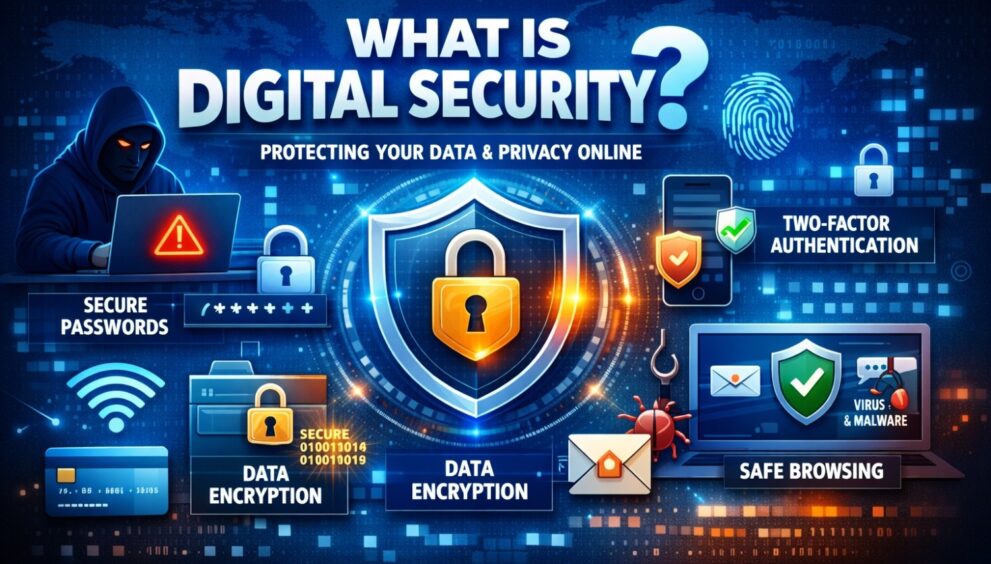
Everyday digital activities now determine how work is done, what shopping looks like, how people communicate and manage information. From online payments to shared work files and cloud storage, data is constantly transferred between digital systems. New needs have emerged to safeguard this information against abuse, theft, or tampering. Internet security is what helps keep systems, network and the information encoded on them safe.
But what is digital security? This blog explains what digital security means, the key building blocks of digital security, and various types, uses and why it has become a competitive necessity for enterprises.
Elements of Digital Security
It is not possible to explain digital security without talking about its core principles. Here are the 3 key elements of digital security:
Confidentiality
The global average cost of a data breach has climbed to about $4.88 million, reflecting a year-on-year increase of nearly 10%. Confidentiality prevents information from being read by any unauthorised person. It would prevent outsiders from seeing or stealing sensitive information.
Confidentiality can be preserved through encryption, passwords, and access permissions. This is especially true for personal information, financial statements, and business data used for phishing scams. With no privacy, our faith in digital mechanisms crumbles.
Integrity
Integrity centres on maintaining the accuracy and consistency of data. It protects the content from being modified, deleted or transferred without permission. Checksums, hashes, and version control provide integrity for your data. When integrity is lost, decisions made using that data can be destructive. Trusted systems rely on robust integrity policies.
Availability
Availability is the guarantee that systems and data are available at all times when required. It safeguards from downtime due to attacks, system outages or disasters. Availability is also supported by back-ups, redundancy and disaster recovery plans. With systems down, operations may grind to a halt entirely. Digital security is about making sure a service runs all the time smoothly.
Types of Digital Security
Digital security covers many areas. The different types of digital security focus on protecting a specific part of the digital environment.
Access Control
Access control determines who can see or use systems and data. It assigns roles and permissions based on the responsibilities of a user. This is to decrease the internal potential for abuse. Tough access controls mitigate damage if an account is hacked.
Application Security
Application security protects software from different types of digital security risks. This includes secure coding, updating and testing. Attackers take advantage of insecure applications all the time. You can minimise the chances of data leakage and service downtime with this feature.
Cloud Security
Cloud security is a tool to protect data and services from the cloud. It’s all about encryption, identity and surveillance. With the growing popularity of cloud-based businesses, security is no longer up to providers, and users are part of it. With correct cloud security, there is no data leakage or unauthorised access.
Network Security
Network security protects data as it travels across networks. Firewalls, intrusion detection systems and secure connections are used. It blocks unauthorised traffic and monitors suspicious activity. A secure network forms the backbone of the total security of your digital ecosystem.
Endpoint Security
The endpoint security applies to devices such as laptops, mobiles and tablets. Attacks are commonly targeted at these devices. They are provided with certain safeguards through antivirus programs and device management tools. Endpoint security reduces overall risk.
Internet of Things (IoT) Security
IoT security shields connected devices, such as sensors and smart systems. These devices tend to lack security. Configuring those is necessary to stay safe from different online scamming methods.
Threat Intelligence and Response
This type involves using cyber forensics tools for identifying and responding to threats in real time. It uses data to understand attack patterns. Quick response limits damage and recovery time.
Governance, Risk Management, and Compliance
It concerns policies, protocols and statutes in this domain. It makes sure that your security practices are up to minimum standards and regulations. Risk management pinpoints weak spots and focuses action on those priorities. Good governance is what keeps internet security organised and efficient.
Digital Security Applications
Digital security is applied across many technologies and systems. Each application supports safe and reliable digital operations.
1. Application Data Security
This protects data used by software applications. It includes encryption and secure storage. Proper controls prevent unauthorised data access. It also reduces the impact of application breaches and online scams.
2. Authentication and Access Control
Authentication verifies user identity. Access control is what you can do. As a pair, they stop unauthorised system usage. Multi-factor authentication provides an added layer of security.
3. Artificial Intelligence and Machine Learning
AI and ML help detect threats faster. They analyse large data sets for unusual behaviour. This improves response time and accuracy. These tools adapt as threats evolve. One example is AntiFraud from Quick Heal that protects you from different types of fraudulent activities.
4. Blockchain
Blockchain provides secure and transparent data records. It prevents data tampering through decentralised control. Each transaction is verified and recorded permanently. This makes it useful for secure transactions and data integrity.
5. Data Protection
Data protection focuses on safeguarding stored and shared data. It includes encryption, backups, and access controls. Proper data protection reduces the impact of breaches. It also supports privacy requirements.
6. Cloud Architectures
Secure cloud architectures use layered security. This includes identity controls and monitoring. Proper design reduces exposure to digital security risks. It ensures safe use of cloud resources.
7. Endpoint Data Security
This protects data stored on individual devices. It includes device encryption and remote wipe features. Lost or stolen devices pose less risk. Endpoint security keeps data safe beyond central systems.
8. Internet of Things (IoT)
IoT security ensures safe communication between devices. It controls access and monitors activity. Secure IoT systems prevent misuse. This is vital for connected environments.
9. Network Security
Network security applications monitor and control traffic. They block malicious activity. Secure networks support safe data transfer. This keeps communication reliable and protected.
Digital Security as an Enterprise Imperative
Organisations rely on digital systems for daily operations. A single breach can lead to financial loss and reputational damage. Customers expect their data to be protected at all times. Strong digital security tools build trust and support long-term growth. It also ensures compliance with legal and industry standards. Investing in security is no longer optional. It is a core part of responsible and sustainable business practice.
Frequently Asked Questions
-
What are the 5 areas of digital security?
The five main areas include network security, application security, endpoint security, data security and access control. Together, they protect systems, devices and information. Each area addresses different risks.
-
What is the overview of digital security?
Digital security focuses on protecting digital systems and data from threats. It combines technology, policies, and practices. The goal is to ensure confidentiality, integrity, and availability.
-
What are the 7 types of cybersecurity?
Common types include network, application, cloud, endpoint, IoT, data, and governance security. Each type targets a specific digital layer. Together, they create a complete security framework.
-
What is digital data security?
Digital data security protects information stored or shared digitally. It uses encryption, access control, and monitoring. This prevents data loss and misuse.
-
What are the three types of security systems?
The three main types are physical, technical, and administrative security systems. Physical systems protect hardware. Technical systems protect digital assets. Administrative systems define policies and procedures.


iksula
28th Jan 2026tester