



04
Feb
Feb

What Is a Supply Chain Attack? How It Works, Types, and How to Prevent It?
-
knowlegde-centre / 2 months
- February 4, 2026
- 0

A supply chain attack is a cybersecurity threat where intruders use vulnerabilities of an organisation’s extended network of suppliers, vendors and service providers. The attackers hide within essential tools or services to steal or damage the company’s data. Supply chain cyberattacks are hard to detect without a robust security system and can affect thousands of victims at once.
As organisations highly depend on external logistics or digital services, strong cyber security awareness across teams helps organisations recognise suspicious behaviour in an early manner.
What Is a Supply Chain Attack?
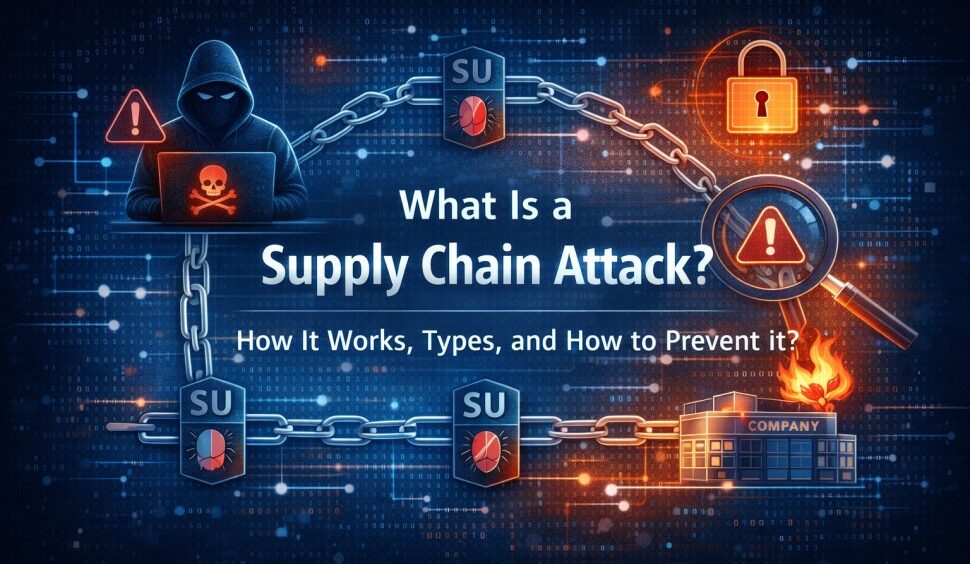
The supply chain cyberattack happens through a trusted partner you rely on. The supply chain attack in cyber security acts like a Trojan horse to access internal systems under the shadow of trusted software. It’s like installing a routine software update for your computer or any particular application from a trusted vendor, not knowing the update itself was tampered with. Once you install the update, every user who is connected to the system is exposed.
How Supply Chain Attacks Work?
Supply chain cyberattacks are dangerous because intruders exploit the connections between multiple organisations. Here’s a brief look at how attackers have performed recent supply chain attacks:
- Find a Vulnerable Partner: Cyberattackers look for a vendor, supplier or software provider that the organisation trusts or relies on.
- Breaks Into The Partner’s System: Hackers use methods like phishing, stealing credentials or tampering with weak security to get inside the supplier’s systems.
- Install Harmful Code: Once inside, intruders’ software or hardware adds malicious code or backdoors into the vendor’s software, updates or services.
- Trust Delivery: The tampered software or update is distributed to its target organisation through standard operational procedures.
- Users’ Installation: After installation on the company’s supply chain system, the hidden malicious code runs. It may steal data, open hidden access points or let hackers move further in the system.
Why Supply Chain Attacks Are Increasing?
The main cause of the rising supply chain cyberattacks is heavy reliance on an interconnected ecosystem of external software, services and vendors. These interconnected systems may create indirect access points, along with the following factors:
- Extensive Use of Third-Party Tools: Businesses highly use cloud platforms, plugins and external services to streamline their operations. Each of these systems introduces additional security risk if used without AntiFraud antivirus protection.
- Usage of Open Source Components: Many software applications have multiple open source libraries, and flaws in any of these public domain platforms can affect interconnected systems.
- Faster Software Release Cycles: Rapid software development and frequent updates can reduce the time for necessary security checks, in which malicious code can be distributed to systems.
- Automation: Automated updates and deployment of software can rapidly distribute harmful code on the systems prior to proper security checks.
Common Types of Supply Chain Attacks
Supply chain cyberattacks occur in several forms, depending on where trust is in the most vulnerable state. The following are a few common types of supply chain attacks that have occurred within organisations:
1. Software Supply Chain Attacks
Cybercriminals interfere with trusted applications during the development, build or update stage of software. Software supply chain attacks often include a breach of a vendor’s internal systems or altering update mechanisms. Once these systems are compromised, it allows attackers to reach the organisation’s internal network and increase their potential to harm connected users.
2. Hardware Supply Chain Attacks
Hardware attacks target the physical form of the organisational infrastructure, which includes servers, networking devices, embedded components and USB peripherals. This system-wide security breach may take place far from the end user, manufacturing facilities or logistics units. Thus, taking appropriate steps to maintain baseline security for device components helps reduce exposure from compromised hardware entering operational environments.
3. Open-Source Dependency Attacks
Open source software attacks use the vulnerability of widespread reuse of publicly available code. In these codes, attackers may add malicious changes to popular libraries of software ecosystems or take control of a significant part of the system. Depending on their objectives, attackers may trigger data exfiltration (stealing API keys or credentials) or deploy ransomware to the system.
4. Island Hopping Attacks
Island hopping is a type of cyberattack in which hackers attack organisations that share access with partners to carry out day-to-day work. This method is increasingly combined with AI-powered social engineering attacks, which make fraudulent access attempts appear more legitimate. Hackers often start by making a security breach in a small vendor that has remote access, shared systems or trusted login credentials. From there, hackers use the legitimate connection to enter the systems of the main organisation.
Real-World Examples of Supply Chain Attacks
The following supply chain attacks examples demonstrate the serious business and security breaches outside an organisation’s direct control:
- Kaseya (2021): Kaseya faced a system-wide breach in 2021 within its remote management software, and attackers used it to push ransomware updates through managed service providers (MSPs). Because MSPs manage IT services for many clients, this security breach has disrupted hundreds of businesses simultaneously.
- SolarWinds (2020): In 2020, hackers secretly added malicious code to a trusted SolarWinds Orion software update. When organisations installed this update, attackers gained access to internal systems.
- NotPetya (2017): NotPetya was a destructive malware attack in June 2017, which was targeted at the Ukrainian tax platform. This malware attack spreads automatically across networks and causes severe organisational operations shutdowns.
How to Prevent Supply Chain Attacks?
The prevention of the supply chain requires continuous verification of software and partners interacting with internal systems. Here are a few supply chain attack prevention ways are mentioned:
- Assess Vendors Regularly: Review suppliers’ security policies, update processes and incident response capabilities.
- Limit third-party Access: Grant vendors only the required portion of the system and remove permissions when no longer needed.
- Monitor Software and Activities: Track your system updates, unusual app behaviour and access patterns for early issue detection.
- Strengthen your Access Controls: Enable multi-factor authentication for secure internet usage for both internal and external connections.
Stay Protected Against Supply Chain Attacks
The first step to protection against supply chain cyberattacks is awareness about potential data breaches. In this regard, organisations need to regularly review suppliers, monitor third-party activities and control access to reduce the probability of cyberattacks. By embedding preventive measures into daily activities and using trusted solutions like Quick Heal’s antivirus software, businesses can minimise the probability of service disruption and strengthen cybersecurity measures.
Conclusion
Supply chain cyberattacks mark the importance of viewing cybersecurity as part of everyday internet safety. Safe internet browsing practices, such as installing the latest security patches and mindful usage of digital tools, improve digital security for both organisations and individuals. When these practices are aligned with supply chain awareness, organisations get better control of service delivery.
frequently asked questions
-
What are some famous supply chain attacks?
Some of the popular supply chain attacks include the SolarWind, Kaseya and NotPetya data breaches. These incidents have shown how compromised suppliers can affect thousands of organisations simultaneously.
-
What are the 5 biggest supply chain challenges?
The five largest threats to supply chain systems are the lack of visibility into third-party security, over-dependence on third-party software, intricate ecosystems with vendors, uneven security standards and fast software upgrades. Together, these issues make it harder to detect and control cybersecurity risks.
-
How can supply chain attacks be prevented?
Prevention steps include regular assessment of vendors, limiting third-party access and closely monitoring software updates and system behaviour. A combination of all these three steps with strong access control reduces the exposure to hidden threats.
-
Can antivirus software prevent supply chain attacks?
Antivirus solutions alone cannot fully prevent supply chain cyberattacks. In order to prevent such data breaches, antivirus software can be used within internal systems, along with associating with partners who have strong cybersecurity controls.
-
What features should an antivirus have to protect against supply chain attacks?
To get protection from the supply chain cyberattacks, your antivirus should have dark web monitoring, AntiFraud capabilities, phishing and email protection, as well as anti-ransomware protection. Integration with threat intelligence and update validation further improves protection for vulnerable systems.