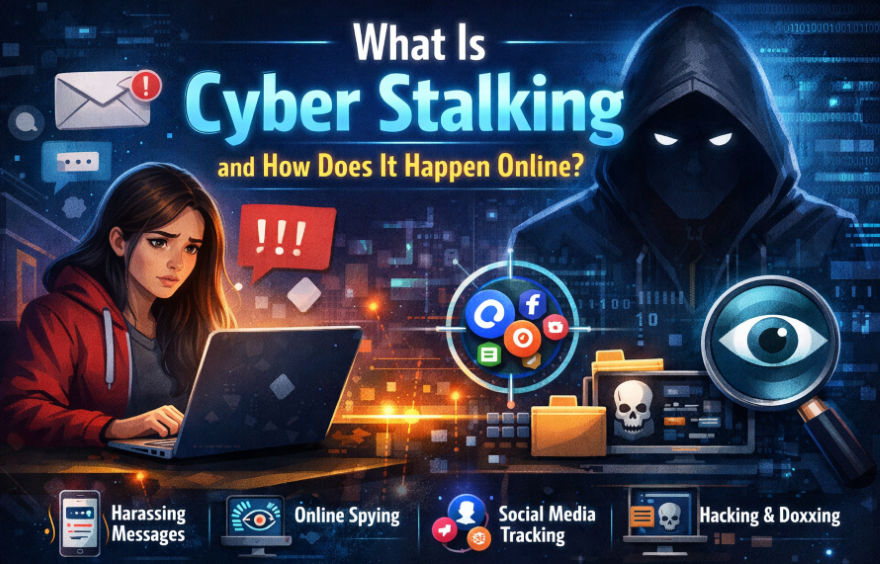
It’s a normal day! You are posting your pictures, videos or updates on social media sites just for fun. Until an unknown person asks for your personal information online or tries to contact you repeatedly, that is cyberstalking. If we look at official records, more than 10,000 cases were registered for online stalking since 2023. Thus, being aware of how cyber staking happens, its common types, and what you can do to take necessary steps becomes essential.
How Cyber Stalking Happens Online?
Cyber stalking may happen when someone repeatedly misuses online space to watch, contact or harass another person. It often unfolds quietly across everyday digital platforms individuals use for work, study and social life. The following are a few primary ways in which individuals can be stalked online:
- Social Media Platforms: On social media, stalkers constantly monitor your profiles through fake accounts, send multiple messages, or may comment on every post.
- Messaging Apps: Messaging apps can be used by stalkers to send you spam messages, missed call spamming, voice notes or threats.
- Email: Email stalking includes sending frequent unwanted messages, blackmailing or personal content.
- Online Forums and Gaming Spaces: In forums and gaming platforms, stalkers can spread rumours or monitor your activities across groups.
Common Forms of Cyber Stalking
Cyber stalking can appear in several forms, and it often blends into normal digital interaction at first. What makes it harmful is the repetition of unwanted contacts and the fear of discomfort. Below are some of the most common ways to answer ‘how to tell if someone is cyber stalking you?’:
1. Repeated and Unwanted Online Contact
Messages and calls are sent continuously and without permission, are usually overwhelming and result in mental suffering to the victim. Stalkers often send numerous messages in chat apps or comment on all social media posts.
2. Digital Monitoring and Online Surveillance
Through digital monitoring, the stalker closely watches your online activities. This can be done by tracking your check-ins, stories, profile updates or ‘last seen’ statuses. Such surveillance can include when an unknown person questions why you liked a post or why you were active at a certain time.
3. Impersonation and Misuse of Identity
Imperception may happen when a stalker creates a fake profile using your name or photos. They may message your friends with the intention to damage your relationships or reputation. In some situations, email IDs or social accounts are misused to post misleading content.
4. Online Harassment, Threats, and Intimidation
Harmful online communications can include getting abusive messages, threats or cyberbullies posting consistent negative comments on your social media posts. The common signs of cyberstalking are that the stalker may use foul language, threaten harm or pressure you to respond to them. These actions are meant to scare you as well as create emotional distress.
5. Public Shaming and False Information Sharing
Through cyber stalking, the stalker spreads rumours or private information online. For the victim, the consequences of cyberstalking include spreading rumours in group chats or tagging you in humiliating content.
Examples of Cyber Stalking in Real Life
The examples of cyberstalking can include behaviours that are intended to intimidate victims. Here are a few common scenarios of cyberbullying and stalking:
1. Fake Social Media Account
An individual using social media may notice the same account reacts to every photo. Later, the person using that suspicious account creates another account with the victim’s name and picture. Through this fake account, the stalker spreads fake news or asks for funds from the victim’s friends or family members. This can be a challenging situation for the victim to reclaim their identity and remove the digital footprint of the fake account.
2. Tracking Through Digital Cues
Suppose a college student makes vlogs about where they travel and posts them on social media. Once the video is live, a viewer leaves likes and comments on every vlog the student posts. At first instance, this may look harmless, but over time, the comments may take on specific things. These comments can include the student when they upload content or send multiple ignored private messages, saying things like ‘I saw you didn’t post today’ or ‘You changed your routine this week.’
The following scenario can occur when the person comments on publicly mentioning the victim on a social media post. These situations creates the need for students to detect and report cyberstalking to the social media platforms and authorities.
Cybersecurity Awareness and the Role of Trusted Security Brands
Online threats like stalking, fraud, fake identity and data misuse can be a psychologically and financially challenging situation for the victims. To help you address such instances, trusted cybersecurity brands like Quick Heal support digital safety with its all-new AntiFraud.Ai solution. This online protection software is available for Android, iOS and Windows devices.
Quick Heal also promotes safe browsing practices by providing insights about emerging digital threats and ways to mitigate them. As many people spend time online because of the digitisation of transactions, communication, education and navigation, knowing key steps to stay safe has become essential. Through these steps and advanced antivirus software, they help students, individuals, families and businesses to be protected in the digital space.
Conclusion
Cyber stalking is a growing digital risk that can affect individuals who spend time online. Some of the common types of cyber stalking include repeated unwanted messaging, digital monitoring, impersonation and making online threats to victims. Its impact goes beyond screens, which can cause both psychological and financial distress.
Thus, recognising warning signs, increasing awareness about digital security for devices and using trusted anti-fraud solutions from reputable providers like Quick Heal can help you prevent such occurrences.