
03
Jul
Jul

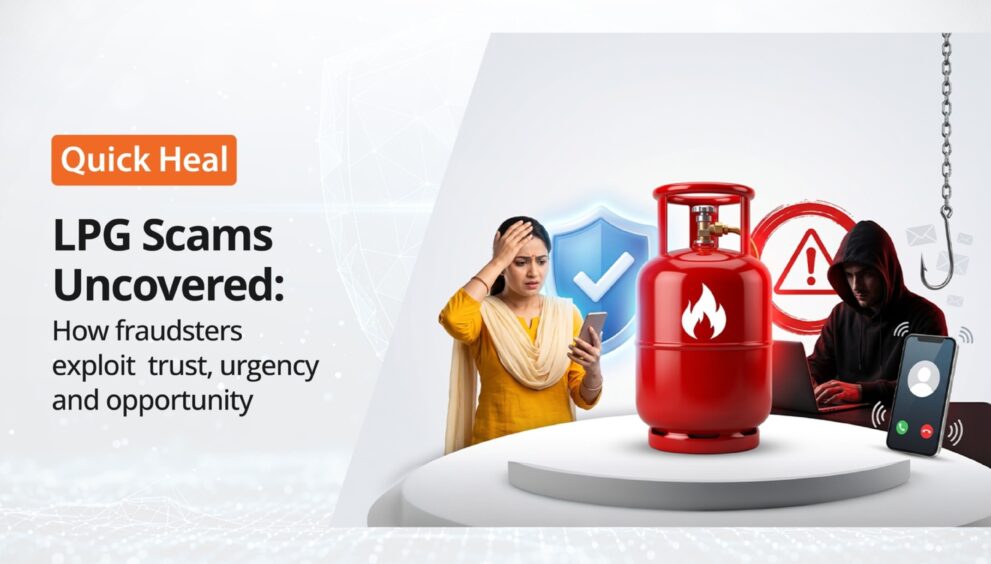
LPG Scams Uncovered: How Fraudsters Exploit Trust, Urgency, and Opportunity
- QuickHeal / 3 months
- July 3, 2026
- 0

Table of Contents
Introduction- Understanding LPG Scams
- How an LPG Scam Typically Works
- Real-World LPG Scam Cases
- Statistical Insights
- Identifying Red Flags and Prevention Tips
- How Quick Heal AntiFraud.AI Helps Detect LPG Scams
- Conclusion
- Frequently Asked Questions (FAQs)
Imagine receiving a message saying that your LPG subsidy has been suspended, your KYC verification has expired, or your gas connection will be disconnected unless you take immediate action. Worried about losing access to an essential household service, many people click the link provided, scan a QR code, or call the customer care number mentioned in the message, only to realise later that they have fallen victim to an LPG scam.
This growing threat points to a much larger cybersecurity challenge. According to the Ministry of Home Affairs, India reported over 36.3 lakh cyber financial fraud incidents in 2024, resulting in losses exceeding ₹22,845 crore. As LPG services become largely digital through online bookings, digital payments, and mobile apps, cybercriminals are exploiting this convenience using fake websites, fraudulent KYC requests, phishing links, and malicious apps.
In this blog, we’ll uncover how LPG scams work, the tactics scammers use, common warning signs, and practical cybersecurity measures to help you stay protected from evolving online fraud.
Understanding LPG Scams
An LPG scam is a type of cyber fraud where scammers impersonate legitimate LPG companies, distributors, customer support executives, or even government agencies to deceive consumers. Their objective is to steal money, personal information, banking credentials, or other sensitive data by exploiting the trust people place in essential household services.
These scams generally target two groups:
Regular LPG consumers who use gas services for cooking and daily household needs.
Individuals interested in LPG dealerships or distributorships who are looking for genuine business opportunities.
Although the methods may differ, the objective remains the same: to trick victims into sharing information or making payments under false pretences.
The Unexpected Message
It often starts with a message that seems urgent.
Maybe it’s an SMS saying your LPG subsidy has been suspended, a WhatsApp message asking you to complete KYC verification, or a call warning that your gas connection will be disconnected.
Since LPG is an essential household service, many people react quickly without verifying the message.
The “Official” Contact
The message directs you to what appears to be an official source – a website, customer support number, WhatsApp account, or mobile app.
Everything looks genuine. The logos are familiar, the language is professional, and there seems to be no reason to suspect a scam.
Winning Your Trust
The scammer acts like a genuine customer support representative.
They may provide booking details, customer IDs, or reference numbers to make the interaction appear legitimate. The goal is simple: gain your trust before making the next move.
Asking for Personal Information
Once trust is established, you’re asked to share details such as full name, mobile number, lPG customer ID, Aadhaar or PAN details, Bank account information and OTPs
These requests are often disguised as routine verification or subsidy-related processes.
The Payment Trap
Soon, you’re told that a small payment is required to complete the process.
It could be a KYC fee, subsidy activation charge, booking fee, or service restoration payment. Since the amount seems reasonable, many victims make the payment without realising they’re being scammed.
The Attractive Business Opportunity
Not all LPG scams target consumers. Some target people looking to start an LPG dealership or distributorship.
The scam usually begins with an advertisement or message promising quick approvals, minimal investment, and attractive returns.
The Dealership Payment Trap
After gaining the victim’s trust, scammers request payments for registration fees. Processing charges, Security deposits and verification fees
Victims are assured that approval is just one step away. However, after multiple payments, the promised dealership never materialises.
The Reality
Eventually, calls go unanswered, websites disappear, and messages stop receiving replies.
Whether it’s a fake subsidy update or a fraudulent dealership offer, the result is the same: victims lose money, share sensitive information, and become targets of fraud.
Real-World Cases
1. LPG Booking Scam Amid Shortage Fears
Amid concerns over potential LPG supply disruptions due to tensions in West Asia, scammers targeted consumers by spreading rumours of an impending cylinder shortage. Victims received calls and messages urging them to book LPG cylinders immediately before stocks ran out. To make the scam appear legitimate, fraudsters shared fake booking links that were designed to steal personal and financial information.
Authorities later clarified that legitimate LPG agencies do not use unsolicited calls or suspicious links for bookings. The incident highlights how cybercriminals exploit current events and public anxiety to create urgency, manipulate victims, and carry out fraud.
2. 5,000+ Fake LPG Booking Accounts Exposed
As more people turned to online platforms for LPG-related services, scammers found new ways to take advantage of them. Cybersecurity firm mFilter It uncovered over 5,000 fake LPG booking accounts and digital assets that were being used to deceive consumers.
These scams often began with messages about LPG bookings, KYC updates, or gas supply concerns. Victims were directed to fake websites or fraudulent booking portals that looked legitimate but were designed to steal personal and financial information.
The case highlights how cybercriminals can turn even routine tasks like booking an LPG cylinder into an opportunity for fraud, especially when people act quickly without verifying the source.
Identifying Red Flags & Prevention Tips
Cybersecurity experts recommend staying alert when dealing with LPG-related communications. Here are a few simple ways to stay protected:
- Be cautious of messages claiming your LPG subsidy has been suspended, your KYC needs urgent verification, or your gas connection will be disconnected. Always verify such claims through official channels.
- Never share OTPs, banking details, Aadhaar numbers, or other sensitive information with anyone claiming to be from an LPG company.
- Avoid clicking on links received through unsolicited SMS, WhatsApp messages, or emails, as they may lead to fake booking or payment websites.
- If you’re interested in an LPG dealership or distributorship, verify the opportunity through the company’s official website and be wary of requests for upfront registration or processing fees.
- Always use official LPG websites, mobile apps, and customer support numbers for bookings, payments, and account-related activities.
A few moments spent verifying a message or offer can help you avoid financial loss and protect your personal information.
How Quick Heal AntiFraud.ai helps in detecting LPG Scams
Quick Heal AntiFraud. AI acts as an additional layer of protection by helping users identify and avoid such threats before they result in financial loss.
- Detects suspicious links: If a scammer sends a fake LPG booking, KYC verification, or subsidy-related link, AntiFraud.AI can help identify potentially malicious websites before you interact with them.
- Alerts users about phishing attempts: Fraudsters often create websites that closely resemble legitimate LPG portals. AntiFraud.AI helps users recognise and avoid such phishing websites.
- Helps prevent financial fraud: By identifying suspicious activities and potential scams, the solution reduces the risk of users sharing sensitive information or making payments to fraudsters.
- Provides real-time protection: Whether the scam arrives through SMS, WhatsApp, email, or a web link, AntiFraud. AI continuously monitors for indicators of fraud and alerts users when suspicious activity is detected.
- Enhances digital awareness: In addition to technology-based protection, AntiFraud.AI helps users stay informed about emerging scam techniques, enabling them to make safer decisions online.
Conclusion
As LPG services continue to become more digital and accessible, scammers are finding new ways to exploit the trust people place in these essential services. Even if it’s a fake subsidy update, a fraudulent booking link, or a dealership offer that seems too good to be true, the goal remains the same: to steal money and sensitive information.
The same social engineering tactics are more often being used in petrol scams, diesel scams, and other utility-related frauds, where cybercriminals create a false sense of urgency to manipulate victims into sharing personal information or making fraudulent payments.
A little scepticism and a few minutes of verification can go a long way in preventing financial loss. Coupled with safe online practices and an intelligent fraud detection solution like Quick Heal AntiFraud.AI, users can better recognise suspicious links, phishing attempts, and emerging scam tactics before they become victims of cyber fraud.
FAQs
1. What is an LPG scam?
An LPG scam is a type of cyber fraud where scammers impersonate LPG companies, distributors, or customer support representatives to steal personal information, banking details, or money through fake KYC requests, booking links, subsidy updates, or dealership offers.
2. Can LPG companies ask for OTPs or banking details over a phone call?
No. Genuine LPG companies do not ask customers to share OTPs, debit or credit card details, or internet banking credentials over calls, messages, or WhatsApp.
3. How can I identify a fake LPG booking or KYC message?
Look for warning signs such as urgent payment requests, suspicious links, spelling errors, unknown sender numbers, and demands for personal or financial information. Always verify such messages through the official LPG company’s website or customer support.
4. Are LPG dealership offers on social media always genuine?
No. While some companies advertise online, many scammers create fake dealership advertisements to collect registration fees or security deposits. Always verify dealership opportunities through the company’s official website before making any payment.
5. What should I do if I receive a suspicious LPG-related message?
Avoid clicking on links or scanning QR codes. Do not share personal information or make payments. Verify the message through the official LPG provider’s website or customer care number and report the incident if it appears fraudulent.
6. Are petrol scams and diesel scams similar to LPG scams?
Yes. Fraudsters use similar tactics across LPG, petrol, and diesel scams, including phishing links, fake payment requests, fraudulent customer support calls, and social engineering techniques to trick victims into sharing sensitive information or making payments.
7. How can Quick Heal AntiFraud.AI help protect me from LPG scams?
Quick Heal AntiFraud.AI helps detect suspicious links, identifies phishing websites, alerts users about potential fraud attempts, and provides an additional layer of protection against evolving cyber scams before they result in financial loss.