


10
Jul
Jul

Parcel Delivery Scams: Why That SMS About Your Package Is Dangerous
- QuickHeal / 3 months
- July 10, 2026
- 0

Table of Contents
- Why do Parcel Delivery Scam Messages Look So Real?
- Common Types of Parcel Delivery Scams in India
- How to Identify a Parcel Delivery Scam
- What to Do If You Receive a Suspicious Parcel SMS?
- What If You Already Clicked the Link?
- How to Prevent Parcel Delivery Scam Attacks
- Final Takeaway
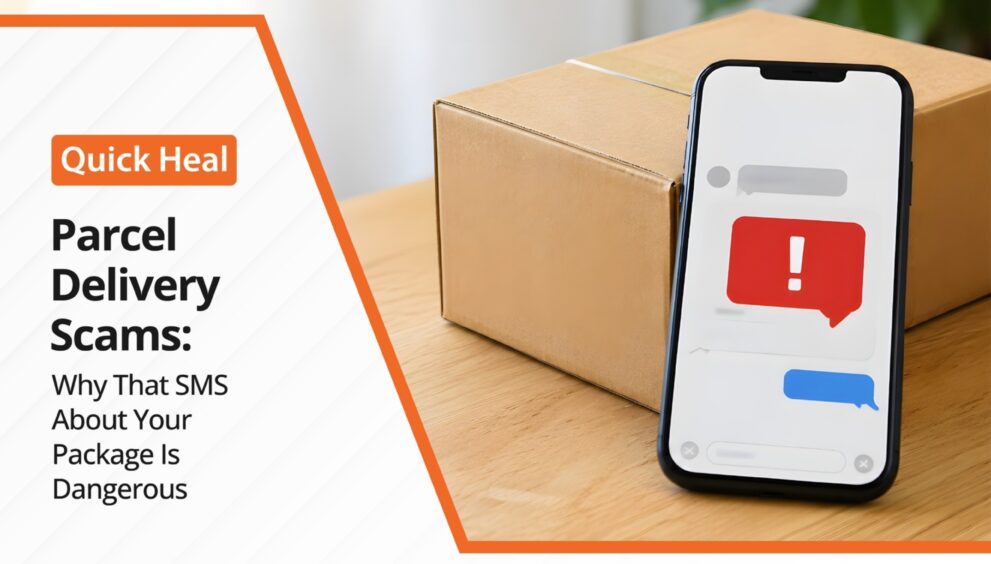
Suddenly, an SMS pops up on your phone, it says: “Your parcel could not be delivered. Update your address now.” It looks urgent. It may even mention a known courier brand. There is a link with a deadline. And that is exactly how a parcel delivery scam begins.
A parcel delivery scam is a phishing trick where fraudsters pretend to be from a courier company, postal service, or delivery agent to steal your money, banking details, personal information, or device access.
People are now trusting online platforms for shopping, ordering, tracking orders, and expecting delivery updates through SMS or WhatsApp. Thus, these scams are now becoming more common. The danger is simple: the message looks small, but the damage can be bigger than expected.
Why do Parcel Delivery Scam Messages Look So Real?
A parcel delivery scam works because it fits into your everyday life. You may have ordered groceries, medicines, clothes, electronics, or gifts. So when you get a delivery alert, your first reaction is not suspicion. It is action.
Scammers use this moment of trust. They may send a fake courier SMS that Indian users can easily mistake for a real update. The message may say:
“Your package is on hold due to an incomplete address.”
“Pay ₹5 to reschedule delivery.”
“Your parcel will be returned today.”
“Customs clearance pending. Click to confirm.”
The fraudster’s goal is to make you click before you think.
Common Types of Parcel Delivery Scams in India
A parcel delivery scam can appear in different forms, like:
1. Fake address update SMS
You get a message claiming your parcel could not be delivered because the address is incomplete. The link takes you to a fake page where you are asked to enter your name, address, phone number, card details, or OTP.
This type of parcel delivery scam is often seen in India Post scam messages, where criminals misuse the trust people have in postal services.
2. Small payment trap
A scammer may ask you to pay a small redelivery fee, often ₹2, ₹5, ₹10, or ₹20. The amount feels harmless, so many people enter their card details. Once you enter your information, fraudsters may use it for unauthorised transactions. Sometimes, a parcel delivery scam begins with a small payment request.
3. Fake courier brand messages
A FedEx scam text may claim that a parcel is waiting for customs clearance, delivery confirmation, or urgent payment. These messages may include wrong spellings, suspicious links, or pressure-based language.
A real courier company will not ask you to share sensitive banking details, OTPs, or passwords through a random SMS link.
4. Fake customs or police threat
In a more serious version of the parcel delivery scam, fraudsters call victims and claim that a parcel in their name contains illegal items. They may pretend to be courier officials, customs officers, police, or cybercrime officers.
This may lead to fear-based scams where victims are pressured to transfer money or share personal documents.
How to Identify a Parcel Delivery Scam
A parcel delivery scam usually has warning signs. You just need to look closely.
Be careful if the message:
- Creates panic with words like “urgent”, “last warning”, or “delivery failed.”
- Asks for a small payment through a link
- Comes from an unknown number or a strange sender ID
- Has spelling mistakes or poorly written sentences
- Uses a shortened or unusual URL
- Asks for OTP, PIN, UPI PIN, card details, Aadhaar, PAN, or passwords
- Tells you to download an unknown app
- Claims to be from India Post, FedEx, or another courier but redirects to a suspicious website.
A genuine delivery update usually gives tracking information and directs you to the official app or website. A fake courier SMS users receive may look convincing, but the link is often the biggest clue.
What to Do If You Receive a Suspicious Parcel SMS?
If you receive a possible parcel delivery scam message, do not panic. Follow these steps:
1. Do not click the link
Even if you are waiting for a package, avoid clicking links in unexpected SMS or WhatsApp messages. Open the courier’s official website or app manually and check your order status.
2. Check your order history
Go to the shopping app where you placed the order. Check whether a real delivery issue is shown there. If there is no alert inside the official app, the SMS may be fake.
3. Verify with the courier directly
If the message claims to be from India Post, FedEx, or another courier, visit the official website or contact customer support through verified channels. Do not use the phone number or link provided in the suspicious message.
4. Never share OTP or banking details
No courier company needs your UPI PIN, OTP, net banking password, or full card details to deliver a package. If a message asks for these, treat it as a parcel delivery scam.
5. Report and delete the message
Report the suspicious message to the concerned platform, telecom provider, or cybercrime authorities. Then delete it to avoid accidental clicks later.
What If You Already Clicked the Link?
If you clicked on a parcel delivery scam link, act quickly.
First, disconnect from the internet if something suspicious was downloaded.
Do not enter any more details. If you shared banking information, call your bank immediately and block your card, UPI, or net banking access if needed. If money has been deducted, report the fraud on the national cybercrime helpline 1930 and file a complaint on the National Cyber Crime Reporting Portal.
If you installed an unknown app, uninstall it immediately. Also, check app permissions, especially SMS, accessibility, contacts, and notification access. Run a trusted mobile security scan to detect malware or risky apps.
Change passwords for important accounts, especially email, banking, shopping, and UPI-linked services.
If you shared Aadhaar, PAN, or address details, stay alert for future identity misuse.
H2:How to Prevent Parcel Delivery Scam Attacks
The best way to stop a parcel delivery scam is to build safer digital habits.
- Use official apps for tracking orders.
- Bookmark trusted courier websites instead of opening SMS links. Enable transaction alerts for your bank accounts.
- Keep your phone’s operating system and apps updated.
- Avoid installing apps from unknown sources.
- Use strong passwords and enable two-factor authentication wherever possible.
Also, talk to family members about these scams. Senior citizens, students, and frequent online shoppers are often targeted because they may act quickly when they see a delivery alert. A simple conversation can prevent a costly mistake.
Final Takeaway
The next time you receive a delivery message, pause before you click. Check the sender. Verify the link. Use the official app. Never share OTPs or payment details through random links.
A parcel delivery scam works only when you react in a hurry. Staying alert is your first layer of protection.
Quick Heal helps protect your digital life from phishing links, malicious downloads, unsafe websites, and online threats. With advanced security features for home users, Quick Heal adds an important layer of safety while you shop, browse, bank, and track deliveries online.
Stay alert, stay protected, and make every click safer with Quick Heal.