




09
Jul
Jul

What Is SIM Swap Fraud and How to Protect Your Bank Account
- QuickHeal / 3 months
- July 9, 2026
- 0

Table of Contents
- What Is SIM Swap Fraud?
- How SIM Fraud Works Step by Step
- Why SIM Swap Fraud Is So Dangerous
- Warning Signs of a SIM Swap Attack
- SIM Hijacking in India: Why the Threat Is Growing
- How to Protect Yourself from SIM Swap Fraud
- What to Do If You Suspect SIM Swap Fraud
- Conclusion: Staying Ahead of SIM Swap Attacks
- FAQs
Imagine waking up one morning to find that your phone has suddenly lost network connectivity. Calls won’t go through, messages stop arriving, and your mobile banking apps seem inaccessible. At first, it may appear to be a temporary service issue. However, within a few hours, you discover unauthorised transactions in your bank account and realise that cybercriminals have taken control of your mobile number.
Contrary to malware or phishing attacks that require victims to click malicious links, SIM swap fraud exploits the trust placed in mobile numbers as a verification tool for banking, digital payments, and online services.
SIM swap fraud is not a niche cybercrime. According to the FBI’s Internet Crime Complaint Center (IC3), SIM swapping caused more than $68 million in reported losses in 2021, with over 1,600 complaints filed.
What Is SIM Swap Fraud?
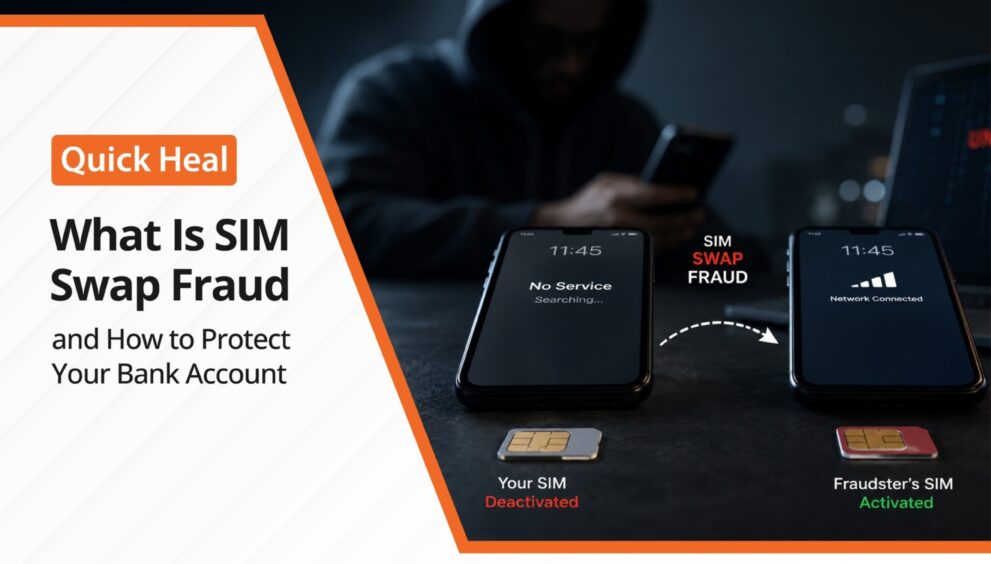
SIM swap fraud is a cybercrime in which fraudsters transfer a victim’s mobile number to a SIM card under their control. Once the transfer is successful, the criminal can receive calls, SMS messages, OTPs, and account verification codes intended for the victim.
Because many financial institutions use mobile numbers as part of their authentication process, gaining control of a phone number can provide criminals with a direct path to bank accounts, payment apps, email accounts, and cryptocurrency wallets.
Cybercrime authorities in India have also flagged a rise in SIM-related fraud. In 2025, Maharashtra Cyber issued warnings about SIM swap scams involving fake credit card offers and identity theft, pointing out how fraudsters use stolen personal information to obtain duplicate SIM cards and intercept banking OTPs.
How SIM Fraud Works
Understanding how SIM fraud works can help you identify warning signs before significant damage occurs.
Step 1: Gathering Personal Information
Fraudsters first collect information about the target through:
- Social media profiles
- Phishing emails and messages
- Data breaches
- Public records
- Fake customer service interactions
Information such as date of birth, phone number, address, and account details helps criminals impersonate victims.
Step 2: Contacting the Mobile Service Provider
Using stolen information, scammers contact the victim’s telecom provider and claim that their phone has been lost, damaged, or stolen.They request a replacement SIM card linked to the victim’s number.
Step 3: Activating a New SIM Card
If the telecom provider’s verification process is bypassed, the mobile number is transferred to a SIM card controlled by the attacker.
At this point, the victim’s phone loses network access.
Step 4: Accessing Financial Accounts
The criminal attempts password resets on banking apps, email accounts, and digital wallets.
Since OTPs and verification codes are now sent to the fraudster’s SIM card, they can gain unauthorized access and transfer funds.
Why SIM Swap Fraud Is So Dangerous
Many people view their phone number as a simple communication tool. However, in today’s digital environment, it functions as a critical identity credential.
A successful SIM swap fraud incident can allow criminals to:
- Access bank accounts
- Reset passwords
- Take over email accounts
- Compromise digital payment apps
- Access cryptocurrency wallets
- Bypass SMS-based security measures
Because financial institutions often trust mobile-based verification, a SIM swap attack can have serious financial consequences within a very short period.
Real-Life Example: ₹7.42 Crore Lost Through a SIM Swap Attack
In one of the most recent cases in India, a Mumbai-based steel trading company reportedly lost ₹7.42 crore after cybercriminals gained control of the owner’s mobile number through a SIM swap attack. The victim first received a SIM change notification from the telecom provider. By the time the fraud was identified, criminals had already accessed banking systems linked to the compromised number and transferred funds from the company’s accounts.
Warning Signs of a SIM Swap Attack
Recognizing the early signs of SIM swap fraud can help limit potential losses.
Sudden Loss of Mobile Network
One of the most common indicators is an unexpected loss of calls, SMS services, or mobile data without any technical explanation.
Unusual Account Notifications
Unexpected password reset emails, login alerts, or banking notifications may indicate someone is attempting to access your accounts.
OTPs You Didn’t Request
Receiving one-time passwords or verification codes without initiating any transaction could signal an attempted SIM swap attack.
Inability to Access Accounts
If passwords suddenly stop working or account recovery options change without your knowledge, immediate action is required.
SIM Hijacking India: Why the Threat Is Growing
Cases of SIM hijacking in India have increased alongside the rapid adoption of digital banking, UPI transactions, and mobile payment services. Several factors contribute to the rise of SIM hijacking in India:
- Increased reliance on mobile-based authentication
- Large volumes of personal data available through breaches
- Growing use of online financial services
- Sophisticated social engineering techniques
Cybercriminals understand that gaining access to a single phone number can potentially unlock multiple financial accounts linked to that number.
How to Protect Yourself from SIM Swap Fraud
Strengthen Telecom Account Security
Many telecom providers offer additional security measures such as PIN protection, Account passwords, SIM lock features and Identity verification requirements. Enable these protections whenever possible.
Limit Personal Information Online
Fraudsters often gather information from social media profiles. Avoid publicly sharing birth dates, phone numbers, addresses and personal identifiers. Reducing publicly available information makes impersonation more difficult.
Use App-Based Authentication
Where available, choose authenticator apps instead of SMS-based OTPs. App-based authentication reduces dependence on mobile numbers and provides stronger security against SIM swap fraud.
Enable Banking Alerts
Activate instant transaction notifications through banking apps and email. Early detection can help you respond before major losses occur.
Create Strong, Unique Passwords
Use unique passwords for banking accounts, Email accounts, financial apps and digital wallets. Password managers can help generate and store secure credentials.
Monitor Mobile Service Interruptions
Never ignore sudden loss of network connectivity. If your phone unexpectedly stops receiving calls or messages, contact your telecom provider immediately to verify that no unauthorized SIM replacement request has been processed.
What to Do If You Suspect SIM Swap Fraud
If you believe you’re a victim of SIM swap fraud, act quickly:
- Contact your telecom provider immediately.
- Report unauthorized SIM activity.
- Freeze or secure banking accounts.
- Change passwords for email and financial services.
- Inform your bank about potential account compromise.
- Monitor transactions closely.
- File a cybercrime complaint if financial fraud has occurred.
A fast response can greatly reduce financial damage from a SIM swap attack.
H2:Conclusion
Cybercriminals are constantly coming up with new ways to take advantage of authentication mechanisms as digital banking becomes more convenient. SIM switch fraud is especially risky since it targets your cell number, a crucial component of contemporary account security. .
Cybersecurity begins with awareness. By staying informed about threats such as SIM hijacking India and SIM swap attacks, you can better safeguard your bank accounts and digital identity from increasingly sophisticated fraud schemes. Alongside safe digital habits, trusted cybersecurity solutions from providers like Quick Heal can help toughen your overall security posture by protecting devices against phishing attempts, malicious links, and other cyber threats that often accompany financial fraud campaigns.
FAQs
1. What is SIM swap fraud?
SIM swap fraud is a cybercrime where fraudsters transfer your mobile number to a SIM card they control, allowing them to intercept OTPs, banking alerts, and account verification messages.
2. How do I know if I am a victim of a SIM swap attack?
Common signs include sudden loss of mobile network service, inability to receive calls or SMS messages, unexpected password reset notifications, and unauthorized banking transactions.
3. Can SIM swap fraud happen without my phone being stolen?
Yes. In most cases, criminals use stolen personal information and social engineering tactics to convince telecom providers to issue a replacement SIM card without physically accessing your phone.
4. How can I protect my bank account from SIM swap fraud?
Enable account PINs with your telecom provider, use app-based authentication where possible, avoid sharing personal information online, and activate real-time banking transaction alerts.
5. What should I do if my phone suddenly loses network connectivity?
Contact your mobile service provider immediately to verify whether a SIM replacement request has been processed. Acting quickly can help prevent unauthorized access to your accounts.
6. Is SIM swap fraud common in India?
Cases of SIM hijacking India have increased alongside the growth of digital banking and mobile payments, making awareness and preventive measures more important than ever.
7. Can cybersecurity software prevent SIM swap fraud?
While security software cannot stop a SIM transfer directly, solutions such as Quick Heal can help protect against phishing emails, malicious links, and other tactics scammers use to gather personal information before launching a SIM swap attack.