



10
Jul
Jul

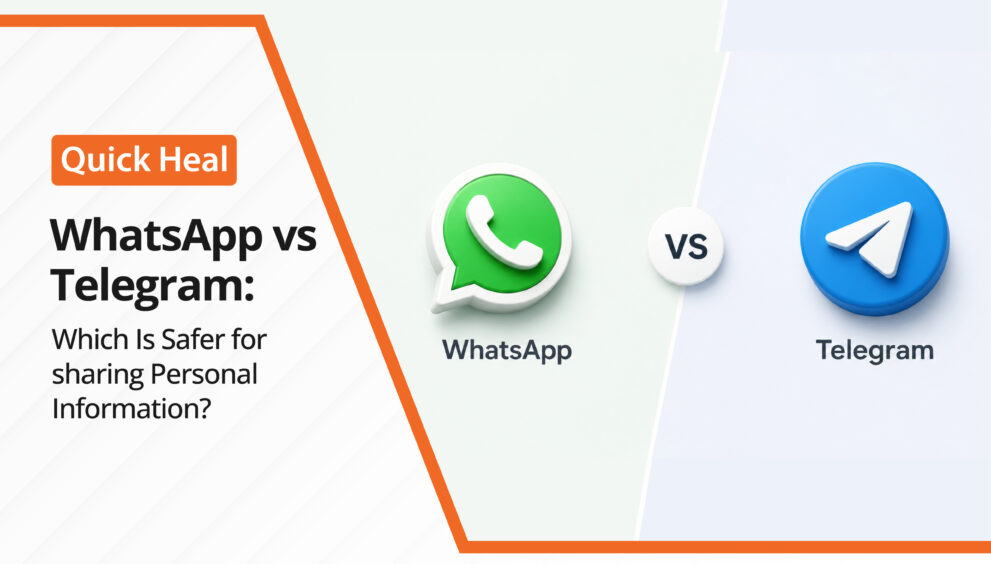
WhatsApp vs Telegram: Which Is Safer for Sharing Personal Information?
- QuickHeal / 3 months
- July 10, 2026
- 0

Table of Contents
- Understanding Messaging App Privacy India
- WhatsApp vs Telegram: What Makes Them Different?
- Is Telegram Safe for Personal Information?
- Real-Life Incidents That Show the Risks
- Privacy Comparison: WhatsApp vs Telegram
- How Scammers Misuse Messaging Apps
- What Not to Share on Any Messaging App
- How to Share Personal Information Safely
- Final Thoughts
Understanding Messaging App Privacy In India
In India, messaging apps are part of daily life. People use WhatsApp and Telegram to share photos, documents, payment receipts, work files, delivery updates and sometimes even Aadhaar, PAN or bank-related details. This makes messaging app privacy in India an important conversation for every smartphone user.
The real question is not just which app is popular. It is which app is safer when personal information is involved? WhatsApp and Telegram both offer useful features, but their privacy models are different.
WhatsApp is widely used for personal, family and business communication. Telegram is popular for large groups, public channels, communities and file sharing. Both can be useful, but both can also be misused by scammers.
For example, a parcel delivery scam can arrive on either platform. A fraudster may send a fake courier message, ask for a small payment or push a link for address verification. The app may be secure, but the user can still be tricked into sharing personal data.
WhatsApp vs Telegram: What Makes Them Different?
WhatsApp uses end-to-end encryption for personal messages and calls by default. This means the message content is protected between the sender and receiver.
Telegram works differently. Regular Telegram chats are cloud chats, which makes them convenient for multi-device access. However, end-to-end encryption is available mainly through Secret Chats. This distinction is important for users who ask, Is Telegram safe for private documents or personal details?
For everyday personal communication, WhatsApp is simpler because encryption is automatic in personal chats. Telegram can be safe too, but users need to understand and use Secret Chats, privacy settings and group controls properly.
A secure chat app is not only about encryption. It is also about how users manage links, files, groups, contacts and privacy settings.
Is Telegram Safe for Personal Information?
Many users ask, Is Telegram safe for sharing private data? The answer is: it depends on how it is used.
Telegram’s Secret Chats are better suited for sensitive one-on-one conversations because they use end-to-end encryption. But regular Telegram chats are designed for cloud access and convenience. This makes them useful for groups and channels, but not ideal for sharing highly sensitive personal details.
Telegram also supports large communities, which can be helpful for learning, updates and public discussions. But the same openness can create risk. Scam links, fake offers, suspicious files and phishing pages can circulate quickly in groups.
If someone sends a parcel delivery scam link, fake investment offer or KYC update message on Telegram, the risk comes from the sender and the link, not just the app.
Real-Life Incidents That Show the Risks
Real-world incidents show that messaging app privacy is not only a technical issue. It is also about scams, spyware, phishing and misuse.
In one major WhatsApp-related case, Meta took legal action against NSO Group after WhatsApp users were targeted through spyware-linked attacks. The issue highlighted how even widely used messaging platforms can become targets for highly sophisticated actors.
Telegram has also been linked to large-scale cybercriminal activity. Research analysing cybercriminal Telegram channels found that such channels shared compromised credentials, malware, exploit tools and social engineering content. Some links shared in these spaces were phishing links, while many executable files carried malware.
Telegram scams have also evolved around bots, fake gifts, crypto offers and phishing pages. Users may be redirected to fake login pages or asked to connect wallets, claim rewards or verify accounts. These tactics are relevant because they show how scams can hide inside normal-looking chats or groups.
In India, the same pattern appears through courier alerts, fake jobs, trading groups and payment requests. A parcel delivery scam may say your package is stuck, your address is incomplete, or a small customs fee is pending. The link may then collect banking or personal information.
These incidents show one lesson: encryption helps protect messages, but it cannot protect users who trust fake links, unknown senders or malicious files.
Privacy Comparison: WhatsApp vs Telegram
Privacy Area | Telegram | |
Default personal chat encryption | End-to-end encrypted by default | Regular chats are cloud chats |
Secret chat feature | Not required for normal personal chats | Available as Secret Chats |
Large groups and channels | More limited | Strong group and channel features |
Multi-device access | Available | Strong cloud-based sync |
Phone number privacy | Privacy controls available | Username and phone number controls available |
Best for | Personal chats and everyday sharing | Communities, channels and large file sharing |
Sensitive information | Safer with trusted contacts | Safer only with Secret Chats and trusted contacts |
For most users, WhatsApp is easier for personal sharing. Telegram is more flexible, but it needs more careful privacy management.
How Scammers Misuse Messaging Apps
Scammers do not always need to hack an app. They only need to make the user click, pay or share details.
Common scams include:
- Parcel delivery scam messages asking for small delivery fees.
- Fake job offers through WhatsApp or Telegram groups.
- Investment groups promising high returns.
- Fake customer care accounts.
- Loan approval scams.
- KYC update links.
- Malware files sent as APKs or PDFs.
- Fake giveaways or crypto rewards.
A parcel delivery scam works because users often expect delivery updates. The message may look urgent and believable. But if it asks for payment, KYC, card details or app installation, it should be treated as suspicious.
What Not to Share on Any Messaging App
Even on a secure chat app, avoid sharing sensitive information unless absolutely necessary.
Do not share:
- OTPs, UPI PINs or passwords
- Full Aadhaar, PAN or passport details
- Card numbers, CVV or banking credentials
- Login details
- Private photos or confidential documents
- Salary slips or bank statements
- Medical records in public groups
- Payment screenshots with transaction IDs
- KYC documents with unknown contacts
A parcel delivery scam, fake support message or fraud call may ask for these details in the name of verification. That is a red flag.
How to Share Personal Information Safely
Before sharing anything sensitive, use these checks:
- Confirm the recipient through a call or official channel.
- Avoid sharing documents in groups.
- Use WhatsApp only with trusted contacts.
- Use Telegram Secret Chats for sensitive one-on-one conversations.
- Turn on two-step verification on both apps.
- Lock private chats where possible.
- Do not click shortened or unknown links.
- Avoid downloading APK files from messages.
- Keep apps and phones updated.
- Report and block suspicious accounts.
- Store important files in a secure vault instead of leaving them in chat history.
For any parcel delivery scam message, verify directly through the courier’s official website or app instead of clicking the link.
Final Thoughts
Messaging scams often involve unsafe links, fake apps, phishing pages, malware downloads and identity theft attempts. Quick Heal helps users strengthen protection across phones, computers, browsing and digital activity.
Quick Heal Mobile Security helps protect smartphones from unsafe apps, malicious links and mobile threats. However, no app can protect users from careless sharing. A parcel delivery scam, phishing link, fake job message or malware file can succeed on any platform if the user does not verify it.
The safest secure chat app is the one used with caution. Verify the sender, avoid unknown links, protect private documents and think before sharing personal information.