


03
Jun
Jun

What Is Spam and Why Do You Keep Getting It?
- Quick Heal / 4 months
- June 3, 2026
- 0

Table of Contents
- What is spam?
- What are spam messages?
- What is spam email?
- Types of spam you should know
- Why do you keep getting spam
- Risks associated with spam
- How spam protection works
- How to reduce spam effectively
- Conclusion
What is spam?
In today’s digital world, unwanted messages are almost impossible to avoid. Whether it is emails, texts, or app notifications, most users encounter spam regularly.
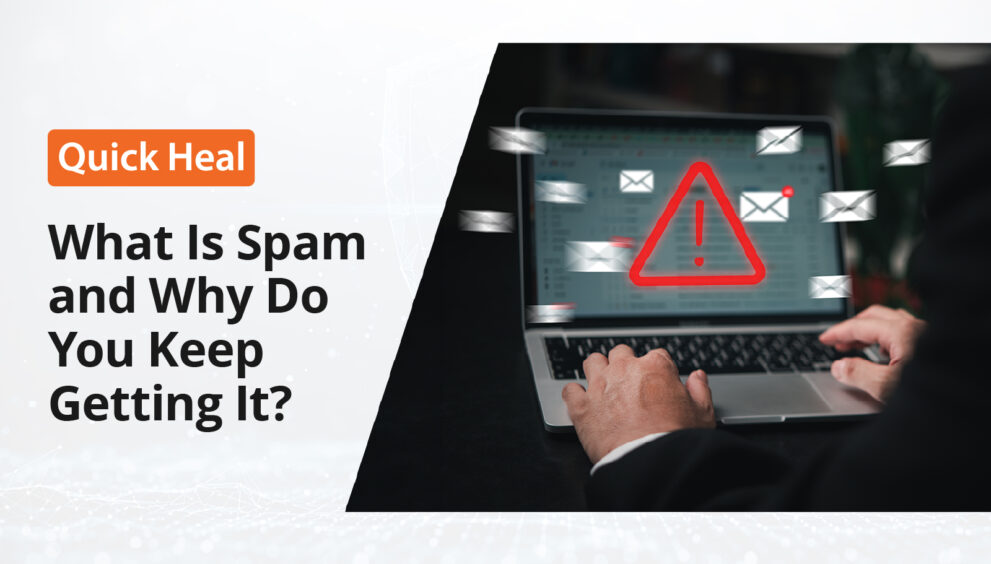
So, what is spam? It refers to unsolicited and often irrelevant messages sent in bulk to a large number of users. These messages are typically promotional, deceptive, or malicious in nature, and they are distributed without the recipient’s consent.
While some spam may seem harmless, such as promotional offers, a significant portion is designed to mislead users, steal information, or spread malware.
What are spam messages?
To understand the broader concept of spam, it is important to define what spam messages are. These are unsolicited communications sent through various channels, including SMS, messaging apps, and social media platforms.
Common examples include:
- Promotional offers from unknown businesses
- Fake lottery or prize notifications
- Messages claiming urgent account issues
- Links to suspicious or unknown websites
These messages often use urgency or attractive offers to prompt users into taking action.
What is spam email?
One of the most common forms of spam is email-based communication. So, what is spam email?
It refers to unwanted emails sent in bulk, usually for advertising, phishing, or fraudulent purposes. Spam emails often appear in inboxes or are filtered into a separate spam folder by email providers.
Typical characteristics of spam email include:
- Generic greetings such as “Dear user.”
- Suspicious attachments or links
- Claims of winning prizes or receiving unexpected funds
- Requests for personal or financial information
While email providers have improved filtering systems, spam emails continue to evolve and bypass detection.
Types of spam you should know
Understanding the types of spam can help users recognise and avoid potential threats.
Promotional spam
- Bulk marketing emails or messages
- Often sent without consent
- Usually harmless but intrusive
Phishing spam
- Designed to steal sensitive information
- Mimics trusted organisations
- Includes fake login pages or links
Malware spam
- Contains harmful attachments or links
- Can install malicious software on devices
- May lead to data theft or system damage
Financial scams
- Messages about lottery winnings or inheritance
- Requests for upfront payments
- Promises of unrealistic returns
Robocalls and SMS spam
- Automated calls or text messages
- Often used for fraud or promotions
- Can lead to further scam attempts
Why do you keep getting spam
Receiving frequent spam messages can be frustrating, but there are several reasons why it happens.
Public exposure of contact details
Sharing email addresses or phone numbers online increases the chances of receiving spam.
Data breaches
When companies experience data leaks, user information may be exposed and used by spammers.
Subscribing to services
Signing up for websites or newsletters can sometimes lead to unwanted communications, especially if data is shared with third parties.
Random targeting
Spammers often send messages in bulk to randomly generated email addresses or phone numbers.
Interaction with spam
Clicking on spam links or responding to such messages can confirm that a contact is active, leading to more spam.
Risks associated with spam
While some spam may seem harmless, it can pose serious risks.
- Data theft: Phishing messages can capture sensitive information
- Financial loss: Fraudulent schemes can result in monetary damage
- Malware infections: Malicious links or attachments can compromise devices
- Privacy invasion: Continuous spam can expose personal data
Understanding what spam is and its risks is essential for maintaining digital safety.
How spam protection works
Modern spam protection systems are designed to filter and block unwanted messages before they reach users.
These systems use:
- Content analysis: Identifying suspicious keywords and patterns
- Sender reputation checks: Blocking known spam sources
- Machine learning: Continuously improving detection accuracy
- User reporting: Learning from flagged messages
Email providers, messaging platforms, and security software all contribute to improving spam protection.
How to reduce spam effectively
Although it may not be possible to eliminate spam, certain steps can help minimise it.
Avoid sharing contact details publicly
Limit the exposure of email addresses and phone numbers on public platforms.
Use spam filters
Enable built-in filters and use security tools for better spam protection.
Do not interact with spam
Avoid clicking on links or responding to suspicious messages.
Unsubscribe carefully
Use legitimate unsubscribe options for trusted sources, but avoid doing so for unknown senders.
Report spam messages
Marking messages as spam helps improve filtering systems and reduces future occurrences.
Use separate email accounts
Maintain different accounts for personal, professional, and promotional use.
Conclusion
Understanding what spam is is the first step towards managing it effectively. From promotional messages to sophisticated phishing attempts, spam continues to evolve alongside digital communication.
By recognising what spam messages are, identifying types of spam, and using effective spam protection measures, users can significantly reduce their exposure to unwanted and potentially harmful content.
A combination of awareness, cautious behaviour, and reliable security solutions can help create a safer digital experience in an increasingly connected world.