


05
Jun
Jun

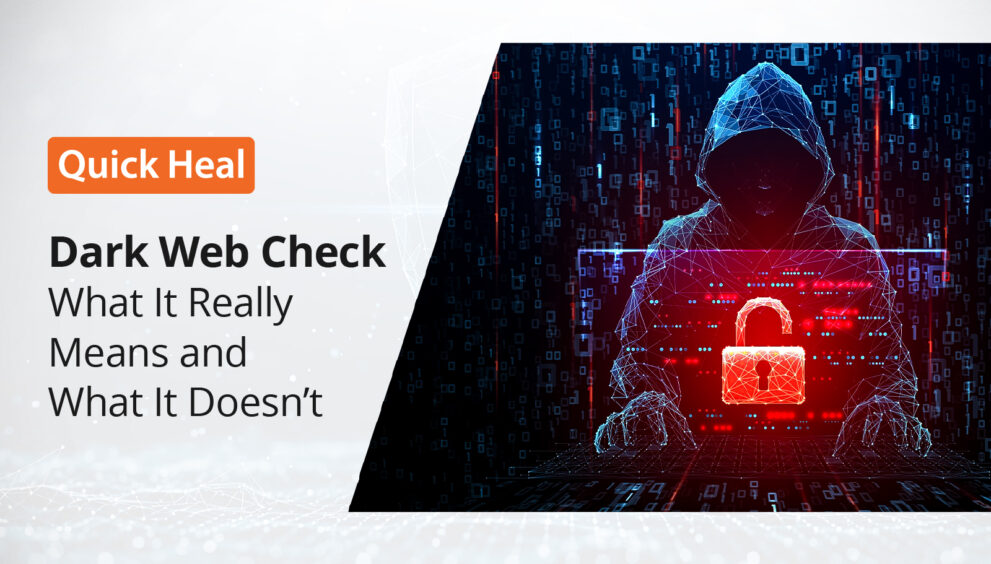
Dark Web Check: What It Really Means and What It Doesn’t
- QuickHeal / 4 months
- June 5, 2026
- 0

Table of Contents
What Is the Dark Web
Why the Dark Web Matters to You
What Is a Dark Web Check
What Is Dark Web Monitoring
What Is a Dark Web Scan
What a Dark Web Check Can Actually Do
What a Dark Web Check Cannot Do
How Your Data Ends Up on the Dark Web
Signs Your Data May Already Be Exposed
What To Do If Your Data Is Found
How to Stay Protected Going Forward
Common Misunderstandings About Dark Web Checks
Conclusion
You may have seen alerts or ads saying your email or password has been found on the dark web. You may have heard terms like dark web check, dark web monitoring, or dark web scan.
But what do they actually mean? And more importantly, what do they not mean?
In 2026, data leaks, phishing scams, and account takeovers have become common. Your information may be exposed without you even realising it. This is where a dark web check becomes relevant.
However, many people misunderstand its purpose. Some expect it to “clean” their data. Others assume it prevents all fraud.
This blog explains clearly what a dark web check really does, how dark web monitoring works, and what you should realistically expect from it.
What Is the Dark Web
The internet is not just what you see on search engines. There are layers.
The surface web is what you access daily.
The deep web includes private databases and secure systems.
The dark web is a hidden part of the internet that requires special tools to access.
According to Kaspersky, the dark web is often used for anonymous communication, but it is also known for illegal activities, including the buying and selling of stolen data.
This includes:
- Email addresses
- Passwords
- Credit card details
- Personal identity data
This is why the dark web matters even if you never access it yourself.
Why the Dark Web Matters to You
Most people assume that if they are careful online, they are safe. That is not always true.
Your data can be exposed through:
- A company data breach
- A compromised app
- Phishing scams
- Weak passwords
Once leaked, this data may end up on the dark web. From there, it can be used for fraud, identity theft, or account takeovers.
This is where a dark web check becomes important. It helps you understand if your information is already exposed.
What Is a Dark Web Check
A dark web check is a process that searches known dark web sources for your personal information.
This could include:
- Email addresses
- Passwords
- Phone numbers
If your data is found in leaked databases, the system alerts you.
Think of it as a warning system. It tells you that your information may already be at risk.
What Is Dark Web Monitoring
Many people ask, what is dark web monitoring, and how does it differ from a one-time check.
Dark web monitoring is continuous. It keeps scanning dark web sources over time and alerts you if your data appears in new leaks.
Unlike a one-time dark web scan, monitoring works in the background.
According to McAfee, dark web monitoring tracks exposed data and notifies users when their information is detected in breaches.
This ongoing approach is important because new data leaks happen regularly.
What Is a Dark Web Scan
A dark web scan is usually a one-time search. It checks whether your data is present in known breach databases at a specific moment.
So when people ask what a dark web scan is, the answer is simple. It is a snapshot.
It does not continuously track future leaks. It only shows what is already known at the time of the scan.
This is why combining a dark web scan with dark web monitoring provides better coverage.
What a Dark Web Check Can Actually Do
A dark web check is useful, but it has a specific role.
Here is what it can do:
1. Identify Exposed Data
It can show if your email, password, or personal details have been part of a known data breach.
2. Provide Early Warning
If your data is exposed, you can act before it is misused.
3. Highlight Risk Areas
Repeated exposure may indicate weak password habits or risky app usage.
4. Support Better Security Decisions
It helps you decide which accounts need urgent action.
A dark web check does not stop threats directly. It helps you respond to them faster.
What a Dark Web Check Cannot Do
This is where most confusion happens.
A dark web check cannot:
1. Remove Your Data from the Dark Web
Once data is leaked, it is difficult to fully remove.
2. Prevent All Fraud
It only alerts you. It does not block scammers automatically.
3. Guarantee Complete Visibility
Not all dark web activity is visible or accessible.
4. Replace Security Practices
It works alongside security, not instead of it.
Understanding these limitations is important. A dark web scan is not a complete solution. It is one part of a larger protection system.
How Your Data Ends Up on the Dark Web
Your data does not appear on the dark web randomly. It usually comes from:
1. Data Breaches
Companies storing your data may get hacked.
2. Phishing Attacks
You may unknowingly share login details.
3. Malware or Spyware
Malicious apps can steal information silently.
4. Weak Passwords
Reused or simple passwords make accounts easy to compromise.
According to Fortinet, exposed credentials are often sold or shared on the dark web for further attacks.
Signs Your Data May Already Be Exposed
You may not always get a direct alert. Watch for these signs:
- Unexpected login attempts
- Password reset emails you did not request
- Unknown transactions
- Suspicious messages sent from your account
These can indicate that your data is already in circulation.
What To Do If Your Data Is Found
If a dark web check shows your data is exposed, act immediately:
1. Change Your Passwords
Update passwords for affected accounts.
2. Use Strong, Unique Passwords
Avoid reusing the same password across platforms.
3. Enable Two-Factor Authentication
This adds an extra layer of security.
4. Monitor Financial Accounts
Watch for unusual activity.
5. Stay Alert for Scams
Exposed data increases your risk of targeted attacks.
Quick action reduces the chances of misuse.
How to Stay Protected Going Forward
A dark web scan tells you what has happened. Protection is about what you do next.
1. Use Secure Password Practices
A password vault can help manage strong passwords.
2. Avoid Suspicious Links and Apps
Most data theft begins with a click.
3. Keep Devices Updated
Updates fix vulnerabilities.
4. Use Real-Time Protection
Threats today move fast. Protection should too.
5. Stay Informed
Understanding risks helps you act better.
Common Misunderstandings About Dark Web Checks
Let’s clear some common myths:
“It removes my data.”
It does not. It only alerts you.
“It protects me completely.”
It is one part of protection, not the whole system.
“If nothing is found, I am safe.”
Your data may still be exposed later.
“It works instantly across all sources.”
Dark web visibility is limited.
Understanding what dark web monitoring is and what it does helps set realistic expectations.
Conclusion
A dark web check is not about fear. It is about awareness.
It tells you if your data is already exposed and helps you take action before it is misused.
Understanding what a dark web scan is and what dark web monitoring allows you to use these tools correctly. They are not complete solutions, but they are important signals.
In a world where data leaks are common, staying informed is your first line of defence.
Your data may already be out there. What matters is how quickly you respond and how well you protect yourself moving forward.
Digital Bharat ka Bharosa, Fraud se Suraksha.