




26
May
May

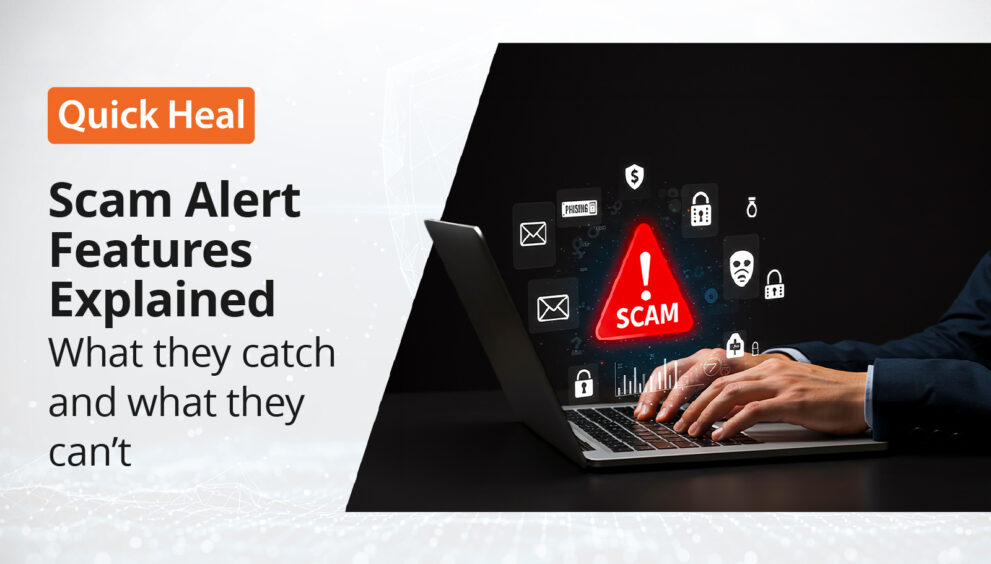
Scam Alert Features Explained: What They Catch and What They Can’t
- Quick Heal / 4 months
- May 26, 2026
- 0

Table of Contents
- What are scam alert features?
- How scam alert systems work
- What scam alert features can catch
- What scam alert features cannot catch
- Why some scams still slip through
- How users can stay protected beyond alerts
- Conclusion
What are scam alert features?
With the rise of digital transactions and social media interactions, cyber threats have become more sophisticated than ever. To counter this, many platforms and security solutions now offer scam alert features designed to warn users about potential threats in real time.
A scam alert typically identifies suspicious activity, messages, or links and flags them before users engage with them. These alerts may appear as spam alert notifications, fake alert message warnings, or even fraudster alert prompts when risky behaviour is detected.
While these systems play a crucial role in cybersecurity, it is important to understand both their capabilities and their limitations.
How scam alert systems work
- Modern online scam alerts rely on a combination of technologies to detect threats. These include:
- Pattern recognition: Identifying known scam formats, phrases, and behaviours
- Machine learning models: Continuously learning from new threats and user reports
- Database matching: Cross-referencing URLs, phone numbers, and emails with known scam databases
- Behavioural analysis: Detecting unusual activity such as repeated requests for money or personal data
For example, if a message contains a suspicious link or urgent financial request, the system may trigger a new scam alert warning the user before they proceed.
What scam alert features can catch
Known scam messages and patterns
Most scam alert systems are highly effective at identifying scams that follow known templates. These include:
- Lottery or prize-winning messages
- Fake job offers
- Impersonation scams posing as banks or government authorities
- Urgent payment requests
Because these scams often reuse similar language and tactics, they are easier for systems to detect and flag as spam alerts or fraudster alert notifications.
Suspicious links and malicious websites
Another strong capability of online scam alerts is identifying harmful links.
- Links leading to phishing websites
- URLs associated with malware downloads
- Websites flagged in global threat databases
Users are often shown a warning before accessing such links, helping prevent data theft or financial loss.
Unverified or risky senders
Scam alert systems can also detect unknown or suspicious senders.
- Messages from unrecognised numbers or email addresses
- Accounts previously reported for fraudulent activity
- Profiles showing bot-like or abnormal behaviour
In such cases, users may receive a fake alert message warning before engaging.
High-risk transaction prompts
Some systems go further by analysing financial behaviour.
- Requests for immediate transfers
- Transactions involving flagged accounts
- Payment links from unknown sources
These triggers can activate a new scam alert, giving users a chance to pause and reassess.
What scam alert features cannot catch
Despite their sophistication, scam alert systems are not foolproof.
Highly personalised scams
Advanced scammers often customise their messages based on user data.
- Messages that reference real names or recent activity
- Scams crafted using information from social media
- Targeted phishing attempts
These may appear legitimate and bypass standard online scam alerts.
First-time or emerging scams
A new scam alert can only be generated once a pattern is identified.
- Brand-new scam formats
- Newly created phishing domains
- Fresh fraud tactics have not yet been reported
Until these are recognised and added to databases, they may go undetected.
Human manipulation and social engineering
Not all scams rely on suspicious links or keywords. Some depend on trust and psychology.
- Fraudsters building relationships over time
- Emotional manipulation (fear, urgency, authority)
- Requests made through phone calls rather than messages
These scenarios often do not trigger a spam alert, as the interaction may seem normal to automated systems.
Legitimate platforms used for scams
Scammers increasingly operate through trusted platforms.
- Messaging apps
- Social media platforms
- Online marketplaces
Since these platforms themselves are not malicious, detecting scams within them becomes more complex, and a fake alert message may not always appear.
Why some scams still slip through
The main reason scams bypass scam alert systems is their evolving nature. Cybercriminals constantly adapt their strategies to avoid detection.
Key challenges include:
- Rapid creation of new scam formats
- Use of AI to generate realistic messages
- Exploitation of human emotions rather than technical loopholes
- Delayed reporting by victims, which slows detection updates
As a result, even the most advanced fraudster alert systems can only act on known or detectable patterns.
How users can stay protected beyond alerts
While online scam alerts are essential, user awareness remains the strongest line of defence.
Verify before you act
- Double-check sender identities
- Avoid clicking on unknown links
- Confirm requests through official channels
Be cautious of urgency
Scammers often create panic to force quick decisions.
- Messages demanding immediate action
- Threats of account suspension or penalties
- Limited-time offers that seem too good to be true
Avoid sharing sensitive information
Never share:
- OTPs or passwords
- Bank details
- Personal identification documents
Even if the request appears genuine.
Keep systems updated
Security software updates ensure better detection of new scam alert patterns and emerging threats.
Trust your instincts
If something feels suspicious, it probably is. Even without a spam alert, caution is necessary.
Conclusion
Scam alert features have become an essential part of modern digital security. They are highly effective at identifying known threats, suspicious links, and risky behaviour, offering users a critical first layer of protection.
However, they are not a complete solution. Advanced scams, personalised attacks, and evolving fraud techniques can still bypass online scam alerts, making user awareness equally important.
A balanced approach that combines smart technology with informed decision-making is the best way to stay protected. Solutions like those offered by Quick Heal help strengthen this defence by continuously evolving to detect emerging threats while empowering users to navigate the digital world more safely.