


29
Jun
Jun

Swatting Explained: How Fake Emergency Calls Become Dangerous
- QuickHeal / 3 months
- June 29, 2026
- 0

Table of Contents
What is a SWAT team, and why are they involved?
How swatting incidents happen
Why swatting is extremely dangerous
Common targets of swatting attacks
The role of technology and anonymity in swatting
Warning signs and preventive measures
How to prevent swatting
What to do if you become a victim
- Conclusion
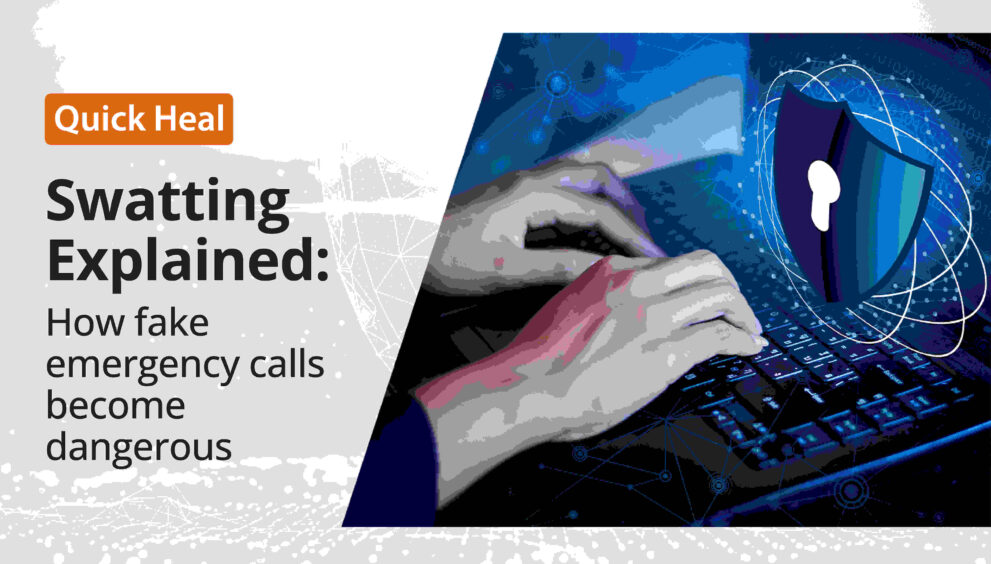
As digital interactions continue to grow, cyber-enabled harassment tactics have become increasingly dangerous. One such threat is swatting, a criminal act that combines online abuse with real-world emergency responses.
So, what is swatting? It refers to the act of making a false emergency report to law enforcement with the intention of triggering the deployment of armed police units to a victim’s location. These fake reports often involve serious claims such as hostage situations, bomb threats, shootings, or violent crimes in progress.
The term swatting originates from the deployment of special police response units, commonly known as SWAT teams. While many incidents begin as online pranks or acts of retaliation, the consequences can quickly escalate into life-threatening situations.
Over the years, swatting has evolved from isolated online harassment into a broader cybersecurity and public safety concern.
H2:What is a SWAT team, and why are they involved?
To understand the seriousness of swatting, it is important to first understand what a SWAT team is.
SWAT stands for Special Weapons and Tactics. These units are specially trained law enforcement teams equipped to respond to:
- Hostage situations
- Armed standoffs
- Terror threats
- Violent criminal incidents
- High-risk emergencies
Because swatting calls often report extreme danger, authorities respond with urgency and maximum force. Officers arriving at a scene may believe they are entering an active threat environment, increasing the risk of panic, confusion, or accidental harm.
This is what makes swatting far more dangerous than a typical prank call.
How swatting incidents happen
A typical swatting incident usually begins online. Attackers gather personal information about a target and use anonymous communication tools to contact emergency services.
The process often includes:
- Obtaining the victim’s address or personal details
- Using spoofed phone numbers or anonymised services
- Reporting a fabricated violent emergency
- Creating urgency to ensure an immediate police response
Some attackers use voice-changing software or internet-based calling systems to conceal their identities.
Victims are commonly targeted through:
- Gaming communities
- Social media disputes
- Online livestreams
- Personal conflicts or harassment campaigns
Because of the public and real-time nature of livestreaming, content creators and gamers are frequent targets of swatting attacks.
Why swatting is extremely dangerous
Although some perpetrators treat it as entertainment or revenge, swatting can have severe real-world consequences.
Risk of physical harm
When armed officers respond to what they believe is a violent emergency, the situation becomes unpredictable.
Victims may:
- Panic or make sudden movements
- Fail to understand police instructions
- Experience physical restraint or injury
In some cases, swatting incidents have resulted in fatalities.
Emotional and psychological trauma
Victims often experience:
- Anxiety and fear
- Ongoing stress
- Feelings of insecurity in their own homes
Repeated incidents can have long-term mental health impacts.
Resource diversion
Every false emergency response diverts critical law enforcement resources away from genuine emergencies.
This can:
- Delay responses to actual crises
- Increase strain on emergency systems
- Put public safety at risk
Reputational damage
For public figures, streamers, or businesses, a swatting incident can create unwanted publicity and reputational harm.
Common targets of swatting attacks
While anyone can become a victim, certain groups face a higher risk of swatting.
Online gamers and streamers
Competitive gaming environments and livestream platforms have become common spaces for harassment-related swatting incidents.
Public personalities
Influencers, journalists, and content creators are often targeted due to their public visibility.
Individuals involved in online disputes
Arguments on forums, social media platforms, or online communities can escalate into targeted harassment.
Businesses and institutions
In some cases, attackers target schools, offices, or organisations using false emergency threats.
The role of technology and anonymity in swatting
Modern communication technologies have made swatting easier to execute.
Caller ID spoofing
Attackers can disguise their phone numbers to appear legitimate or local.
Anonymous communication platforms
Internet-based communication tools make it difficult to trace calls.
Data exposure online
Publicly available personal information can help attackers identify targets and locations.
Social engineering
Perpetrators may manipulate emergency operators by sounding convincing and creating urgency.
The combination of anonymity and easy access to personal information continues to fuel the growth of swatting incidents globally.
Warning signs and preventive measures
Recognising risks early can help reduce vulnerability to swatting.
Potential warning signs include:
- Threats made during online interactions
- Harassment campaigns or doxxing attempts
- Repeated anonymous messages
- Public exposure of personal information
Reducing the amount of personal information shared online is an important first step in minimising risk.
How to prevent swatting
Understanding how to prevent swatting is essential for individuals who maintain an online presence.
Protect personal information
- Avoid sharing addresses or phone numbers publicly
- Use privacy settings on social platforms
- Be cautious with livestream backgrounds or location details
Strengthen online security
- Use strong passwords and multi-factor authentication
- Monitor accounts for suspicious activity
- Avoid reusing credentials across platforms
Inform local authorities if necessary
Public figures or streamers who face repeated threats may choose to notify local law enforcement proactively.
Use secure communication tools
Encrypted and verified communication methods can reduce exposure to malicious actors.
Stay cautious during online disputes
Avoid escalating conflicts with unknown individuals online.
Learning how to prevent swatting requires a combination of cybersecurity awareness, privacy protection, and responsible online behaviour.
What to do if you become a victim
If a swatting incident occurs, staying calm and cooperating with authorities is critical.
Recommended actions include:
- Follow police instructions carefully
- Avoid sudden movements
- Explain the possibility of a false report when safe to do so
- Document the incident afterward
- Report related threats or harassment to the relevant platforms
Victims may also consider improving digital privacy measures following the incident.
Conclusion
Swatting is far more than an online prank. It is a dangerous misuse of emergency response systems that can place victims, law enforcement officers, and the public at serious risk.
Understanding what swatting is, recognising the role of what is a SWAT response team, and learning how to prevent swatting are becoming increasingly important in today’s connected world.
As digital threats continue to evolve beyond traditional cybercrime, awareness, responsible online behaviour, and stronger cybersecurity practices remain essential for reducing the risks associated with targeted harassment and online abuse.