


29
Jun
Jun

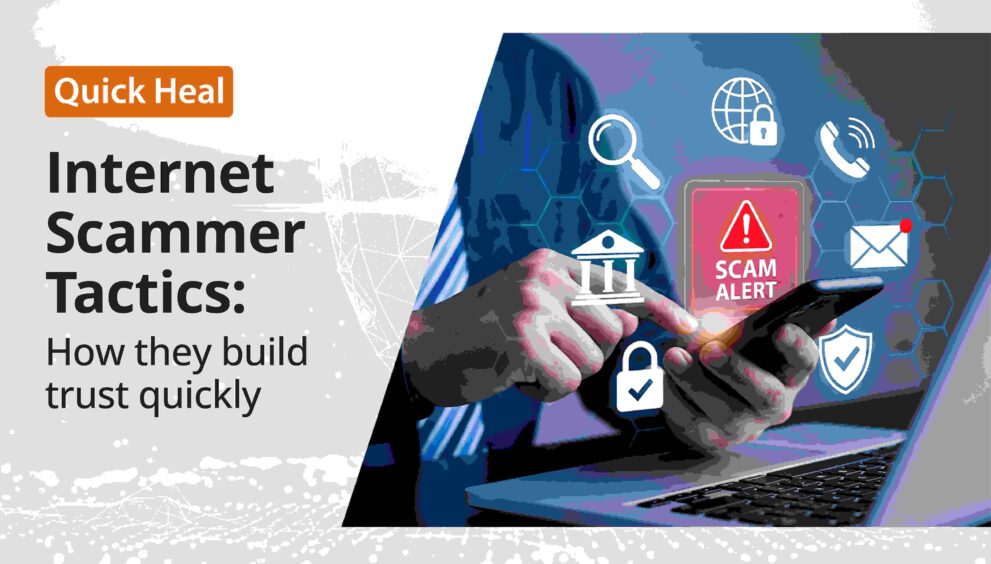
Internet Scammer Tactics: How They Build Trust Quickly
- QuickHeal / 3 months
- June 29, 2026
- 0

Table of Contents
- What is Internet Scammer Behavior?
- The Scammer’s Playbook: Core Psychological Tactics
- The Dark Reality of the Online Scammer
- Modern Tech Tools Fueling Fraud
- How to Protect Yourself from Internet Scams Reporting
- Conclusion
You receive a text message saying your package cannot be delivered unless you click a link and pay a small fee. You are busy, distracted, and expecting a delivery, so you click. Within minutes, you have handed over your financial details to a criminal.
This happens to thousands of smart people every single day. An internet scammer does not always succeed by being a technical genius. Instead, they succeed by hacking the human brain. They use specific psychological tricks to bypass your logic and force you into making quick, reckless decisions.
To protect your money and your identity, you need to understand how internet fraud and scams work. This guide breaks down the behavioral science behind these tactics and shows you exactly how to spot the warning signs.
What is Internet Scammer Behavior?
To protect yourself, you first need to understand what is internet scammer behavior and how it targets our mental weak spots. Our brains operate in two distinct ways. The first mode is analytical and deliberate. It is the part of your brain you use to solve a difficult math problem or read a complex contract. The second mode is automatic and instinctive. It relies on mental shortcuts to help you make hundreds of rapid choices daily without burning out.
Criminals want to force you into automatic mode. When you are tired, multitasking, or stressed, you stop analyzing details. Behavioral scientists call this the Moses Illusion. If someone asks how many animals Moses took on the ark, most people automatically answer two. In reality, it was Noah who built the ark, not Moses. Your brain knows the truth, but because the context feels familiar, it takes a shortcut and misses the error. Every online scammer exploits this exact mental slip to make you ignore obvious red flags.
The Scammer’s Playbook: Core Psychological Tactics
Fraud relies on universal persuasion techniques. Stripped of their specific stories, almost all traps use the same core behavioral triggers.
Tactic | How It Works | The Goal |
Visceral Triggers | Exploits intense emotions like panic, extreme excitement, or fear. | To cloud your judgment and stop you from thinking logically. |
Artificial Urgency | Uses tight deadlines like “account suspension in 2 hours.” | To rush your actions before you can verify the claim. |
Authority Mimicry | Impersonates police officers, tax officials, or bank staff. | To exploit your natural habit of obeying rules and commands. |
The Gift Trap | Offers a free prize, sample, or small favor upfront. | To make you feel psychologically obligated to give something back. |
The Dark Reality of the Online Scammer
Relationship fraud is one of the most devastating forms of financial crime because it inflicts deep emotional trauma along with financial ruin. A romance-focused online scammer will spend months building intense bonds with targets online. They mirror your interests, send constant affectionate messages, and establish trust quickly.
Once the bond is solid, they follow a strict pattern. They will insist on moving the conversation off the dating app to an unmonitored messaging platform. They will constantly manufacture excuses to avoid meeting in person, such as sudden travel issues or overseas work assignments. Eventually, the financial requests begin. It starts with a small emergency loan and expands into large investment demands. Because they have isolated the victim from friends and family, the victim often complies without second opinions.
Modern Tech Tools Fueling Fraud
An internet scammer will combine traditional psychological pressure with advanced digital tools to make their traps look completely authentic.
- Voice Cloning: Using brief audio clips, criminals can replicate the exact voice of a family member or a company manager, calling you to request urgent funds.
- Spoofing: Software allows criminals to alter their caller ID, making fraudulent calls and text messages look like they are coming from your actual bank or a trusted government agency.
- SIM Swapping: Fraudsters trick mobile carriers into switching your phone number to a new SIM card under their control, allowing them to steal your verification codes and log into your private accounts.
- Malicious QR Codes: Criminals place fake QR codes on physical flyers or digital ads, which instantly download tracking software or redirect you to credential-stealing websites.
How to Protect Yourself from Internet Scams Reporting
Defeating these tricks requires you to build deliberate mental habits and know the proper channels for reporting internet scams before you find yourself in a stressful situation.
Personal Security Habits
Always pause when a message creates a sense of panic or excitement. Establish a personal rule that you will never click on links in text messages regarding bank accounts, deliveries, or tax updates. Instead, open your browser and manually type the official website address of the company.
Professional Security Habits
In an office, efficiency often trumps caution, which opens the door to internet frauds and scams. Never change payment details or client bank accounts based on an email instruction alone. Always confirm the change by calling the client on a trusted phone number you already have on file. Workplaces must establish a culture where accuracy is valued over speed, ensuring that employees feel comfortable pausing to check suspicious requests from executives.
Conclusion
Understanding the psychology behind fraud proves that staying safe online requires more than just skepticism. It requires robust, multi-layered digital protection that can intercept threats before they reach your screen.
At Quick Heal, we design security solutions that act as your digital safety net. Our technology blocks malicious links, flags spoofed interactions, and protects your personal data from advanced automated attacks. While criminals continue to target human vulnerabilities, we focus on securing your digital environment so your business, your family, and your identity stay fully protected. Turn to Quick Heal today to secure your digital life with confidence.