Table of Contents
- What Is Social Media Impersonation?
- The Real Impact of Social Media Impersonation
- How Scammers Clone Social Media Accounts
- Why These Scams Are So Effective
- How to Spot a Fake Social Media Profile
- What Should You Do If Someone Clones Your Account?
- Protecting Yourself Against Social Media Impersonation
- Final Thoughts
Some scams don’t begin with suspicious links or fake websites. They begin with a friend request.
You receive a notification from someone you already know. The profile photo is familiar, the name is correct, and the account even has a few mutual friends. Assuming they’ve created a new profile, you accept the request.
Later that day, you receive a message asking for urgent financial help. The person claims they’re travelling, have lost access to their bank account or need money immediately. Because you recognise the name and photo, you don’t think twice before responding.
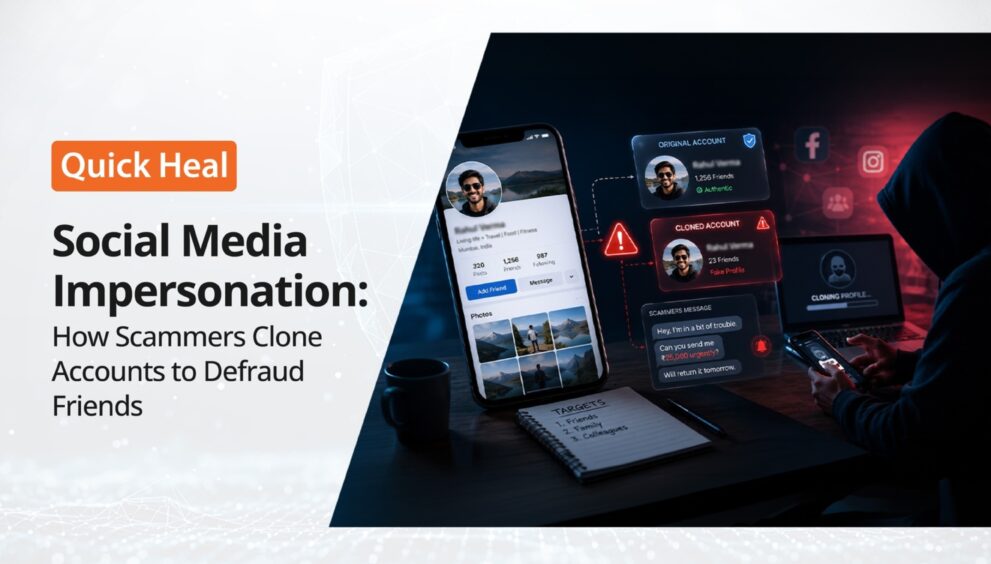
This is how social media impersonation works. Instead of hacking your account, scammers simply copy it. By creating a convincing duplicate, they exploit the trust you’ve built with your friends and family.
As social media becomes an integral part of everyday communication, these scams are becoming increasingly common. From a cloned Facebook account requesting money to cases of Instagram impersonation promoting fake investment schemes, cybercriminals are finding new ways to misuse digital identities for financial fraud.
What Is Social Media Impersonation?
Social media impersonation is a type of online fraud where scammers create a fake profile using another person’s name, profile picture and publicly available information. The aim is not to deceive the account owner but to fool the people connected to them.
Unlike account hacking, impersonation doesn’t require stealing passwords. Everything a scammer needs is often available on a public profile, including photos, workplace details, family members and recent activities.
Once the fake profile looks convincing enough, the scammer starts contacting friends, relatives or followers, asking for money, sharing malicious links or promoting fraudulent offers.
The Real Impact of Social Media Impersonation
Many people assume a cloned social media account is nothing more than an inconvenience. In reality, the consequences can extend far beyond a fake friend request. Once scammers gain the trust of your contacts, they may use your identity to request emergency funds, promote fraudulent investment schemes or distribute phishing links that compromise even more accounts.
For the account owner, the damage is often personal as well as financial. Friends may lose money believing they are helping someone they know, while your reputation can suffer until the fake profile is reported and removed. In some cases, scammers continue creating duplicate accounts even after one is taken down, making early reporting and awareness essential.
This is why social media impersonation is more than just an online nuisance. It is a form of identity misuse that can affect entire social circles, not just one individual.
How Scammers Clone Social Media Accounts
Creating a fake profile takes only a few minutes.
Scammers usually begin by copying profile pictures, cover photos and personal information that users have shared publicly. They then create a new account with a similar name and start sending friend requests to the victim’s contacts.
Many people accept these requests without verifying them, assuming the person has simply created a new account.
Once accepted, the scammer begins building trust. Instead of making suspicious requests immediately, they may start with casual conversations before introducing an urgent situation that requires financial help or personal information.
This is why a fake profile scam in India often succeeds. It doesn’t rely on sophisticated hacking techniques. It relies on familiarity.
Why These Scams Are So Effective
The success of social media impersonation lies in human psychology rather than technology.
People naturally trust familiar names and faces. When a message appears to come from someone they know, they are less likely to question it.
Scammers also create a sense of urgency. They may claim they’ve been involved in an accident, need immediate financial assistance or have lost access to their phone. The goal is to make victims react emotionally before they take the time to verify the request.
Unlike phishing emails, where users are becoming more cautious, impersonation scams exploit existing relationships, making them far more convincing.
How to Spot a Fake Social Media Profile
Although cloned accounts often look genuine, there are usually small details that don’t add up.
A newly created profile with very little activity should raise suspicion. So should duplicate friend requests from someone you’re already connected with. Be cautious if the account immediately starts asking for money, promoting investment opportunities or requesting sensitive information.
Whenever something feels unusual, pause and verify it through another channel. A quick phone call or message to the person’s original account can prevent financial loss.
What Should You Do If Someone Clones Your Account?
If you discover a cloned Facebook account or an instance of Instagram impersonation, act quickly.
Report the fake profile through the platform’s impersonation reporting feature and ask your friends to do the same. Inform your contacts using your genuine account so they don’t interact with the fake profile.
It’s also a good idea to review your privacy settings. Limiting who can see your profile information, friends list and personal details makes it harder for scammers to recreate your identity.
If you believe any of your accounts have been compromised, change your passwords immediately and enable multi-factor authentication.
Protecting Yourself Against Social Media Impersonation
Completely preventing social media impersonation may not always be possible, but reducing the information available publicly can significantly lower the risk.
Think carefully before accepting duplicate friend requests, even if they appear genuine. Avoid sharing personal information that could help scammers build convincing fake identities, and never send money based solely on a message received through social media.
Modern cybersecurity solutions also add an extra layer of protection. While they cannot stop someone from creating a fake profile, they can help detect phishing links, malicious websites and fraudulent apps that often accompany impersonation scams.
Final Thoughts
Quick Heal AntiFraud.AI helps strengthen your digital safety by identifying suspicious online activity, detecting potential fraud attempts and providing proactive protection against evolving cyber threats. With intelligent fraud detection capabilities, it helps safeguard your digital interactions while you browse, communicate and make online transactions.
From social media impersonation and phishing scams to malicious websites and fraudulent links, Quick Heal provides an additional layer of security to help you stay protected in an increasingly connected world.
Because protecting your digital identity is not just about securing your accounts. It is also about protecting the trust you share with the people around you.