


29
Jun
Jun

Fake Text Message Scams: How to Identify and Avoid Them
- QuickHeal / 3 months
- June 29, 2026
- 0

Table of Contents
Understanding Fake Text Message Scams
Why Fake Text Messages Are So Dangerous
Common Types of Scam Text Messages
How to Identify a Fake Text Message
Red Flags You Should Never Ignore
How to Respond to a Fake SMS
How to Avoid Fake Text Message Scams
Why Mobile Security Is No Longer Optional
Final Thoughts: Think Before You Tap
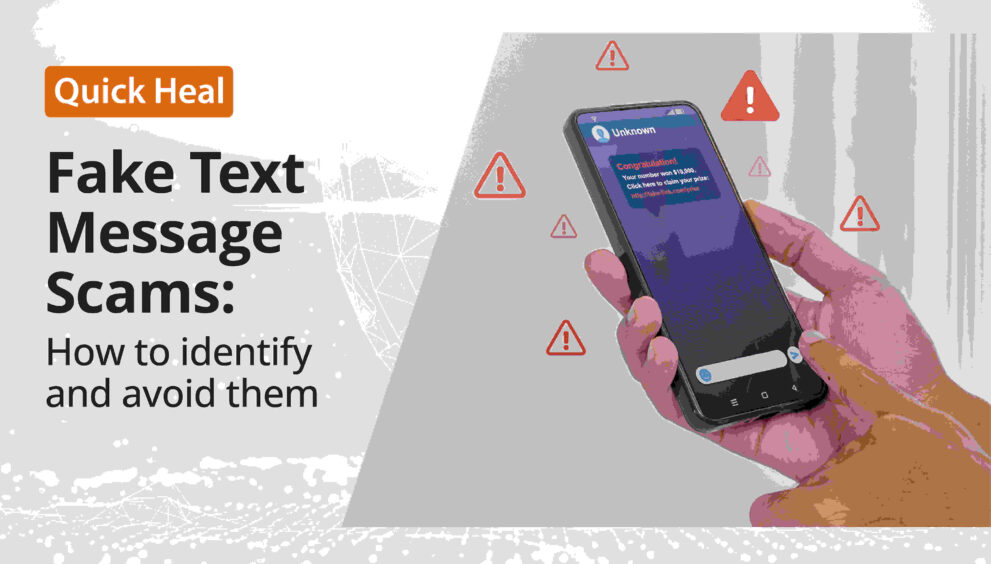
In a world where most of our daily life runs through a smartphone, a Fake Text Message can do more damage than many people realise. It may look like a bank alert, courier update, KYC reminder, cashback offer or government notice. The message may seem urgent, official and harmless, but one wrong tap can expose your money, identity and personal information.
A Fake Text Message is not just spam. It is often part of a larger cyber fraud attempt known as smishing, where scammers use SMS to trick users into clicking malicious links, sharing OTPs, downloading unsafe apps or revealing sensitive details.
This blog explains how a Fake Text Message works, how to recognise scam text messages and what you can do to protect yourself from fake sms scams before they cause real damage.
Understanding Fake Text Message Scams
A Fake Text Message is a fraudulent SMS created to look like it has come from a trusted source. It may copy the tone, format and language of real alerts from banks, delivery companies, telecom providers, payment apps or shopping platforms.
The goal is simple: make you act quickly without thinking.
A fake message may ask you to:
- Update your bank KYC.
- Verify your account.
- Claim a reward.
- Pay a small delivery fee.
- Share an OTP.
- Download an app.
- Call a fake customer support number.
- Click a link to avoid account suspension.
What makes a Fake Text Message dangerous is its timing. It reaches you directly on your phone, feels personal and often creates panic. Many users trust SMS more than email, which makes fake sms scams easier to execute.
Why Fake Text Messages Are So Dangerous
A Fake Text Message works because it uses urgency, fear or temptation. The scammer does not need to hack your phone immediately. They only need you to click once, enter one password or share one OTP.
Once that happens, criminals may be able to access your bank account, payment app, email, social media account or personal documents. Some scam text messages also lead to malware downloads that can monitor your activity, steal credentials or misuse your phone permissions.
The biggest risk is that a fake message often looks routine. A parcel update, electricity bill reminder or bank alert may not feel suspicious at first. That is why awareness is your first layer of protection.
Common Types of Scam Text Messages
Scammers keep changing their methods, but most scam text messages follow familiar patterns.
Fake Bank Alerts
This Fake Text Message may say your account will be blocked unless you update your KYC immediately. The link usually takes you to a fake banking page where your login details are captured.
Example:
“Your account will be suspended today. Complete KYC now.”
Fake Delivery Messages
A fake sms may claim that your parcel is stuck or requires a small payment. The amount may be low, but the real aim is to steal your card or UPI details.
Fake Reward Messages
These scam text messages promise free vouchers, cashback, lottery prizes or reward points. The offer sounds exciting, but the link usually leads to a fake form or payment page.
Fake OTP Messages
A Fake Text Message may ask you to share an OTP for verification, refund processing or delivery confirmation. Genuine organisations do not ask you to share OTPs over SMS or calls.
You can also refer to Quick Heal’s guide on how to verify fake OTP messages for a better understanding.
Fake Job or Loan Offers
Some fake sms scams offer part-time jobs, easy loans or instant income. They may ask for a registration fee, bank details or app installation.
How to Identify a Fake Text Message
A Fake Text Message usually leaves clues. You only need to pause and check carefully before taking action.
Warning Sign | What It Means |
Urgent language | The scammer wants you to panic and act quickly |
Suspicious link | The website may be fake or malicious |
Request for OTP or PIN | This is a clear fraud indicator |
Unknown sender | The message may not be from a verified source |
Too-good-to-be-true offer | Rewards or cashback may be bait |
Poor formatting | Errors may indicate a fake message |
Threat-based messaging | Scammers use fear to force action |
A genuine organisation will not pressure you to share confidential details through SMS. If a Fake Text Message asks for OTPs, passwords, UPI PINs, card details or personal documents, treat it as unsafe.
Red Flags You Should Never Ignore
A Fake Text Message may not always have spelling mistakes or obvious errors. Some are written professionally and use official-looking names. That is why you should look beyond the surface.
Be careful if the message:
- Asks you to click a shortened link.
- Mentions account suspension or legal action.
- Requests immediate payment.
- Offers unexpected rewards.
- Asks for personal or banking information.
- Comes from a random mobile number.
- Uses manipulative wording like “urgent,” “final warning,” or “act now.”
- Asks you to install an unknown app.
How to Respond to a Fake SMS
If you receive a Fake Text Message, do not respond. Even replying may confirm to scammers that your number is active.
Here is what you should do:
- Do not click any link.
- Do not download attachments or apps.
- Do not share OTPs, passwords or UPI PINs.
- Do not call the number mentioned in the message.
- Verify the update through the official app or website.
- Block and report the sender.
- Delete the message after reporting.
- Contact your bank immediately if you share financial details.
How to Avoid Fake Text Message Scams
Avoiding a Fake Text Message scam starts with safer digital habits. Always open apps directly instead of clicking SMS links. For example, if you receive a bank message, open your banking app manually. If you receive a courier update, visit the official courier website.
You should also:
- Enable multi-factor authentication.
- Use strong and unique passwords.
- Keep your phone software updated.
- Avoid installing apps from SMS links.
- Review app permissions regularly.
- Use reliable mobile security tools.
- Teach family members about scam text messages.
H2:Why Mobile Security Is No Longer Optional
A Fake Text Message is no longer limited to basic spam. Modern scammers use fake websites, AI-generated messages, spoofed sender names, and social engineering to make fraud look genuine.
This is where proactive security helps. Quick Heal AntiFraud.AI is designed to support users against evolving digital fraud attempts by helping detect suspicious activity, phishing attempts, and online threats. For broader device protection, users can also explore Quick Heal Total Security, which helps strengthen digital safety across devices.
Final Thoughts: Think Before You Tap
A Fake Text Message can look simple, but the risk behind it can be serious. One fake message may lead to stolen money, compromised accounts, identity misuse or malware infection.
The best defense is to slow down. Check the sender. Verify the link. Avoid sharing sensitive information. Never share OTPs, passwords, card details or UPI PINs through any message.
Scammers rely on speed. Your safety depends on caution.
At Quick Heal, digital protection goes beyond blocking viruses. With solutions built for modern threats, Quick Heal helps users stay safer against fraud, phishing and suspicious online activity. In a world full of scam text messages, staying alert is not just smart. It is essential.