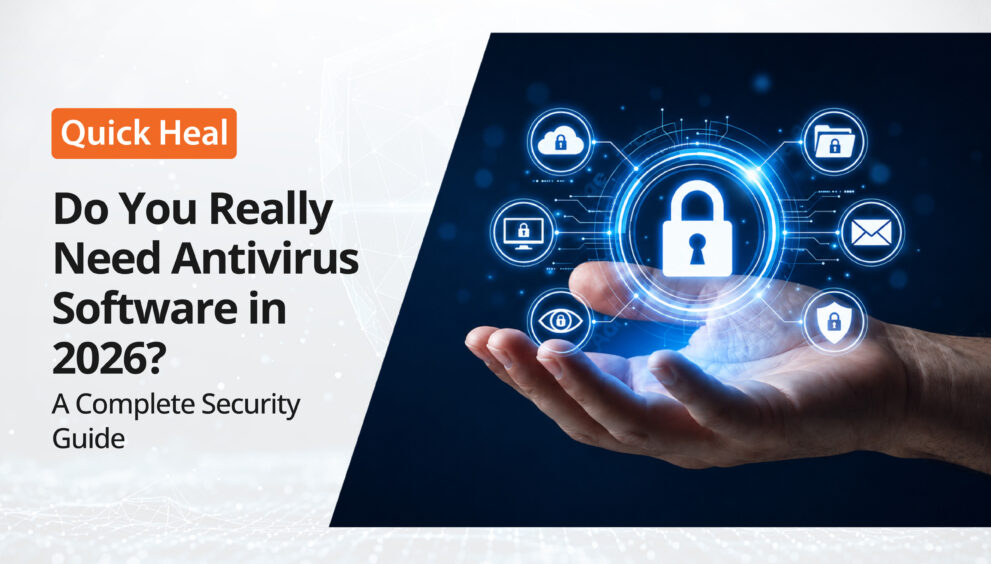
A laptop is used for banking, work, shopping and storing personal files. Then an email arrives with an invoice, a software update appears or a message asks for urgent account verification. Everything looks routine until one malicious link, attachment or download gives a cybercriminal access to the device.
This is why antivirus software still has a role in 2026. Modern threats have moved well beyond traditional computer viruses. Ransomware, spyware, information stealers, phishing and malicious applications can target both devices and the information stored on them.
At the same time, Windows, macOS and other platforms now include several built-in security features. So, does everyone still need additional antivirus protection? The answer depends on how a device is used and the level of exposure to online threats.
How Cyber Threats Have Changed
Cybercriminals increasingly combine social engineering with malware. A convincing phishing email or message can persuade a user to open an attachment, visit a fake website or download malicious software.
Information stealers are another growing concern. These types of malware can target browser passwords, cookies, authentication details and other sensitive information stored on a device.
Microsoft’s 2025 Digital Defense Report identified infostealers, ransomware and the growing use of AI in cyberattacks among significant threat trends. The report also highlighted Lumma Stealer as a prominent information-stealing malware family.
The implication is important: malware protection is no longer simply about detecting a virus after it reaches a computer.
What Can Antivirus Software Protect Against?
Modern antivirus software typically combines malware detection with web, file and behavioural protection.
Threat | Potential impact | Relevant protection |
Malware | Device compromise or data theft | Malware detection |
Ransomware | File encryption or data theft | Ransomware protection |
Spyware | Activity and information monitoring | Behaviour detection |
Infostealers | Password and browser-data theft | Real-time protection |
Phishing | Credential or financial theft | Web protection |
Malicious downloads | Installation of harmful software | File scanning |
This broader approach makes modern virus protection part of a wider security strategy.
Real-World Threat: Ransomware and Data Theft
Ransomware demonstrates why device protection remains relevant even when a system is not directly targeted.
In 2026, Reuters reported that files related to India’s Kudankulam Nuclear Power Plant project appeared on a ransomware group’s leak site following a breach involving third-party infrastructure. The report did not indicate that the plant’s core operational systems had been compromised, but the incident highlighted the risks associated with data theft and connected systems.
For everyday users, the same principle applies on a smaller scale. A compromised laptop can expose work documents, passwords, photographs and other sensitive information even when the attacker is not interested in the device itself.
Is Built-In Security Enough?
Modern operating systems provide a strong security baseline.
Windows includes Microsoft Defender, while macOS uses technologies such as Gatekeeper and XProtect. Android devices also use Google Play Protect to identify potentially harmful applications.
These protections should remain enabled and systems should be kept updated.
However, built-in security cannot prevent every form of social engineering. A user can still be persuaded to enter credentials on a fake website, download an unsafe application or open a malicious attachment.
This is where additional cybersecurity software can provide another layer, particularly for users with greater exposure.
Who Should Consider Antivirus Software?
Additional antivirus protection can be particularly useful for people who:
- Regularly download software, documents or media
- Use computers for banking or financial transactions
- Handle confidential business information
- Receive files from multiple sources
- Frequently use unfamiliar networks
- Share devices with other household members
- Install applications or browser extensions regularly
Someone who uses a fully updated device for basic browsing and trusted applications may already have a reasonable security baseline.
Risk, however, depends on behaviour. A device that is safe for streaming and browsing may have significantly greater exposure once it is used for work, banking, file sharing or downloading software from unfamiliar sources.
What Makes Real-Time Protection Useful?
Modern threats can change quickly, so security cannot rely only on previously identified malware.
Real-time protection monitors activity as it happens. Depending on the solution, it can identify suspicious files, applications, websites and system behaviour.
For example, if a downloaded file suddenly attempts to modify system settings, access sensitive information or encrypt files, behavioural detection may identify the activity and intervene before extensive damage occurs.
This is particularly useful against threats that may not yet have a widely recognised signature.
Antivirus Alone Is Not Enough
Security software works best when combined with basic digital hygiene.
Security habit | Why it matters |
Install updates promptly | Fixes known vulnerabilities |
Use unique passwords | Limits account takeover |
Enable MFA | Adds protection if passwords are stolen |
Verify links and attachments | Reduces phishing and malware exposure |
Download from trusted sources | Limits malicious software |
Maintain backups | Helps recover from ransomware |
These habits are especially important because many attacks begin with a user’s interaction rather than a direct technical compromise.
When Might Built-In Security Be Sufficient?
There is no requirement for every user to install additional security software.
A person using an updated device, downloading only trusted applications, avoiding suspicious links and relying on built-in security features may have relatively low exposure.
However, additional protection becomes more relevant as the number of online activities increases. People who work remotely, manage financial accounts, exchange sensitive files or frequently download applications may face more opportunities for compromise.
The decision should therefore be based on risk and usage rather than the device alone.
What Should Users Look For?
Anyone evaluating antivirus software should look beyond basic virus scanning.
Important capabilities include:
- Real-time malware detection
- Ransomware protection
- Phishing and malicious website blocking
- Malicious download detection
- Behaviour-based threat detection
- Spyware and information-stealer protection
- Automatic security updates
- Minimal impact on system performance
The right combination will vary according to the operating system and individual risk profile.
How Quick Heal Adds Another Layer of Protection
For users looking for additional protection, Quick Heal’s security solutions combine malware detection with features designed to address several modern attack vectors.
Depending on the product and platform, Quick Heal can help detect malicious files and applications, block unsafe websites and protect against threats such as ransomware, spyware and other forms of malware. Real-time security capabilities can also monitor suspicious activity and help prevent threats from compromising the device.
This protection works alongside built-in operating system security rather than replacing it. Regular updates, secure passwords, MFA, cautious browsing and reliable backups remain essential parts of an effective security setup.
Final Thoughts
So, does everyone need antivirus software in 2026?
Not necessarily. Built-in security can provide a solid baseline for users with relatively low-risk digital habits. However, people who regularly handle sensitive information, download files, use financial services or face greater exposure to online threats may benefit from an additional security layer.
The role of modern antivirus software is no longer limited to stopping traditional viruses. It is about detecting malware, blocking phishing attempts, reducing ransomware risks and identifying suspicious activity before it causes significant damage.
Combining built-in security with appropriate cybersecurity software, regular updates and safer online habits provides a more practical approach to digital protection in 2026.